

The Welsh Marches Japanese Garden: Where the Whale Talks to the Stars
The Welsh Marches Japanese Garden
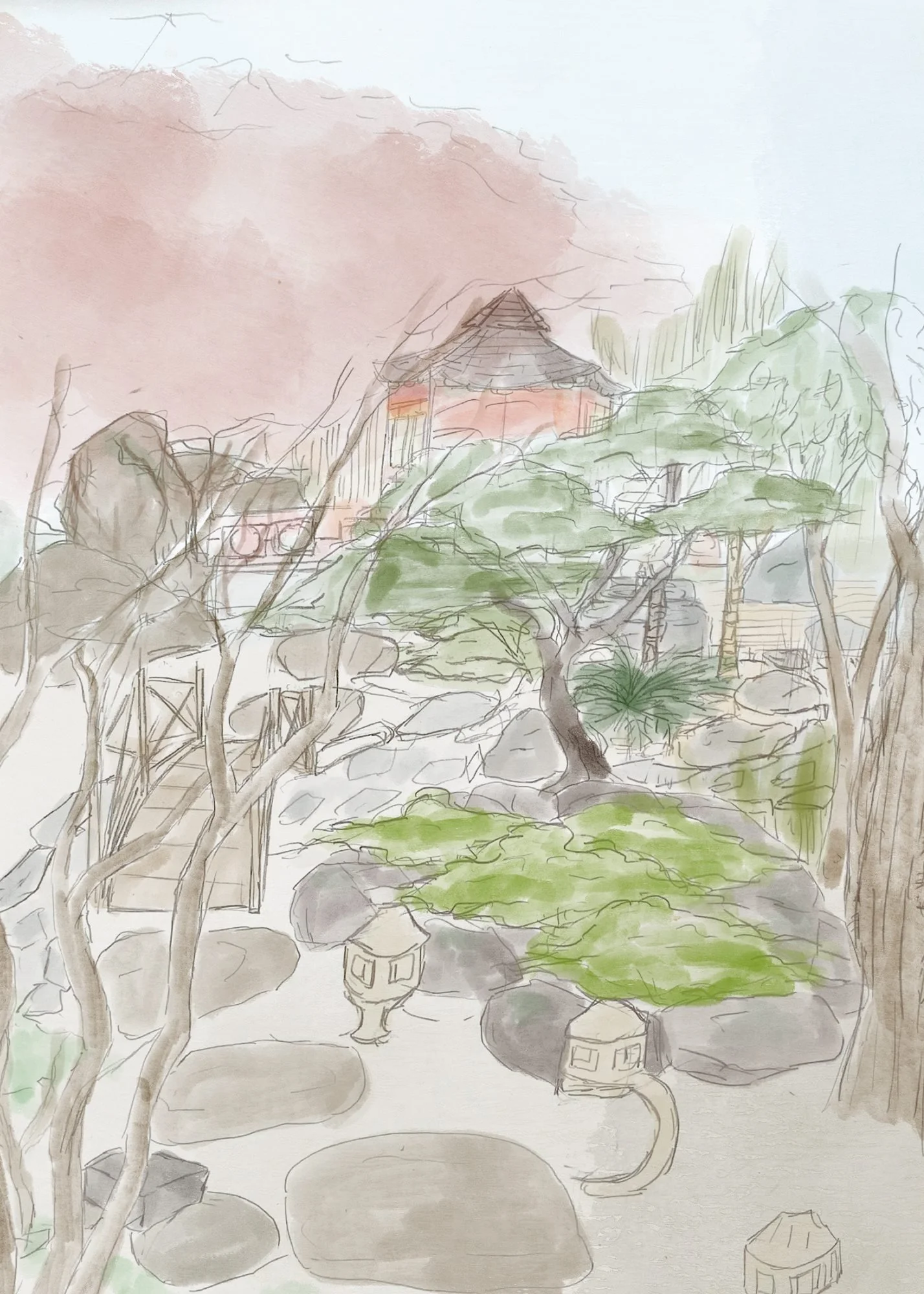
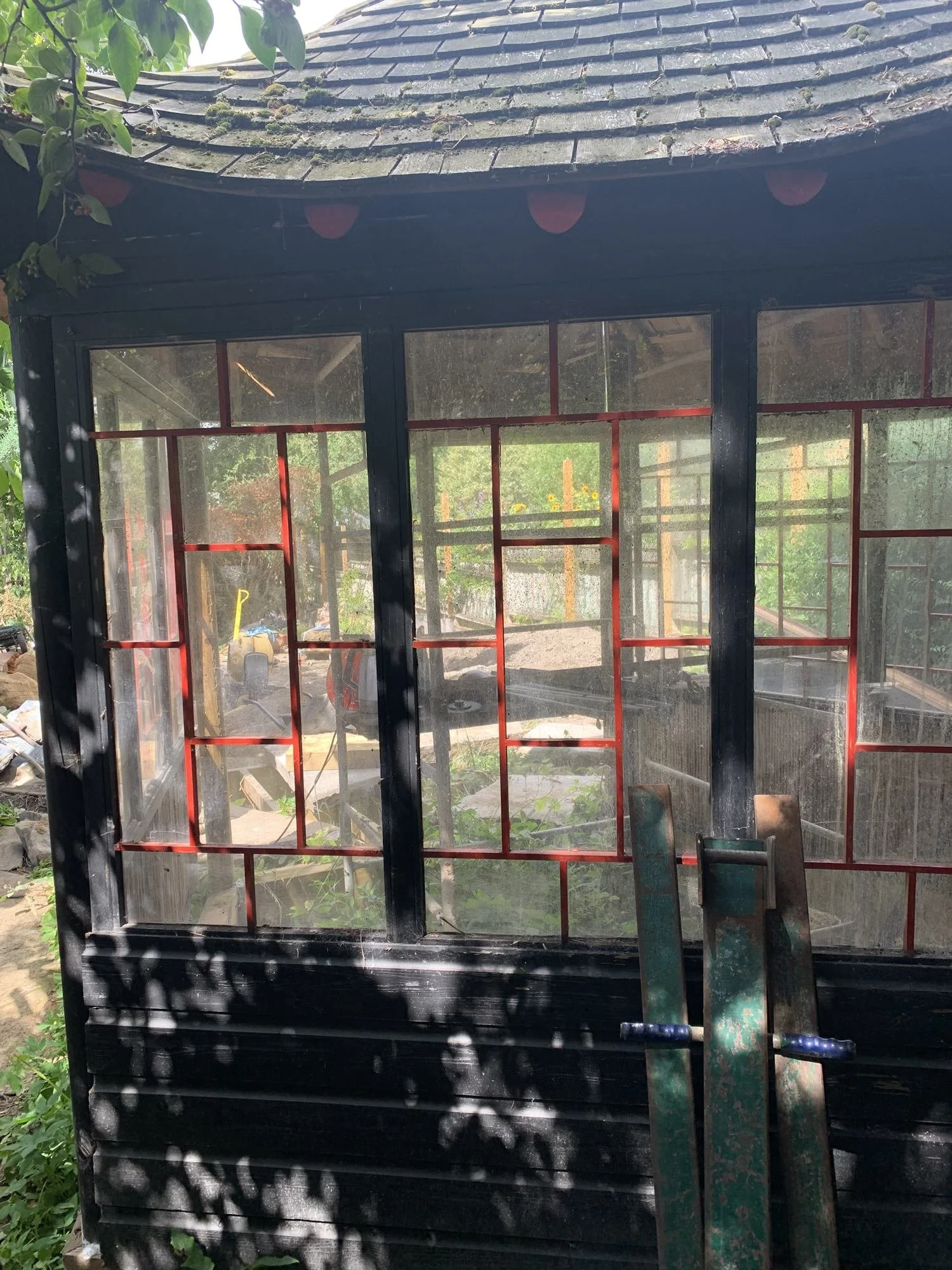
The Garden began when I found a pagoda which had originally been imported from Japan by a pop star but was, with him moving away, destined for a skip.
Instead of it going to landfill, it was towed like a five tier Viking long-ship on a car trailer along the M4 to the Welsh Marches.
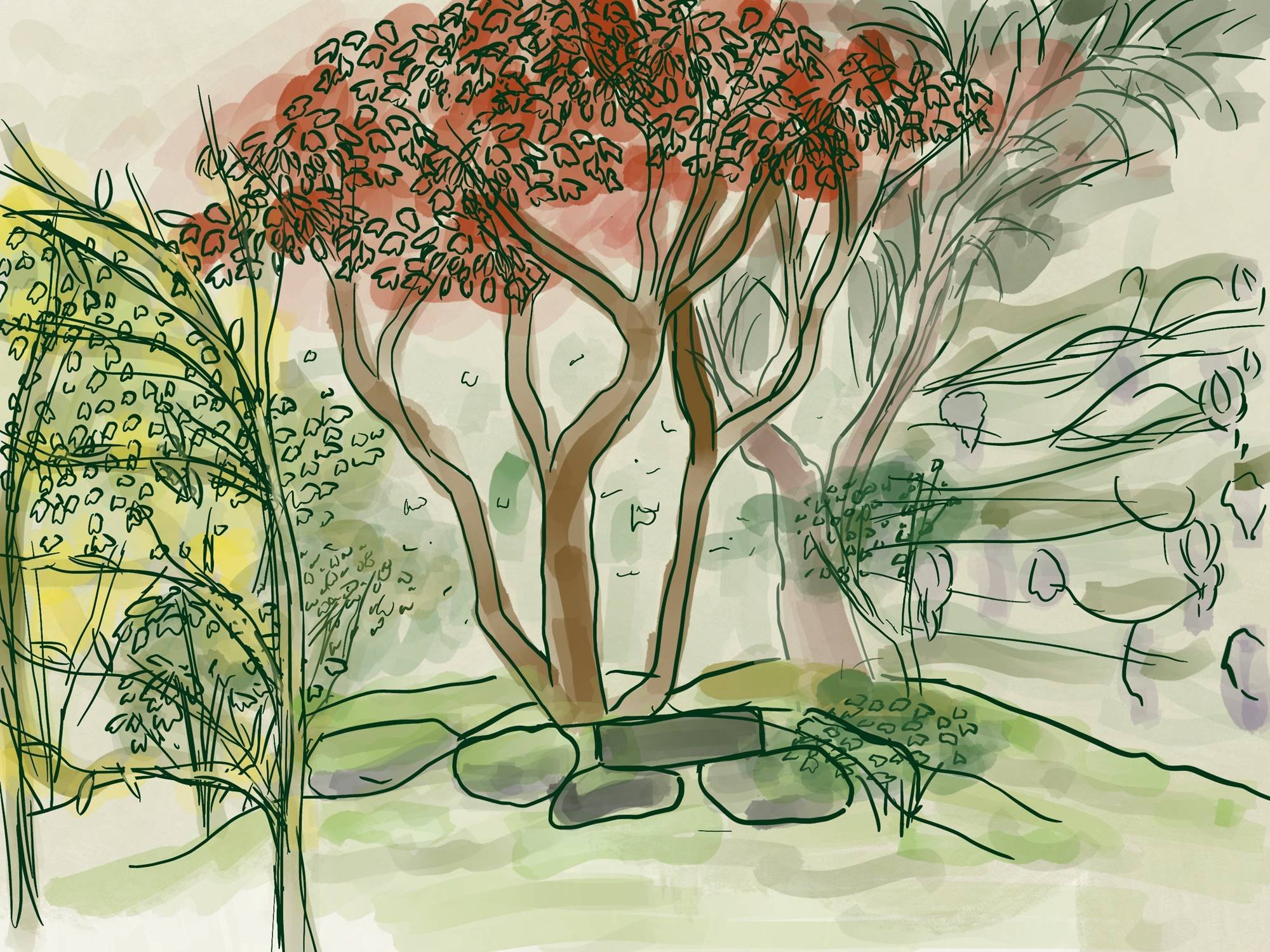
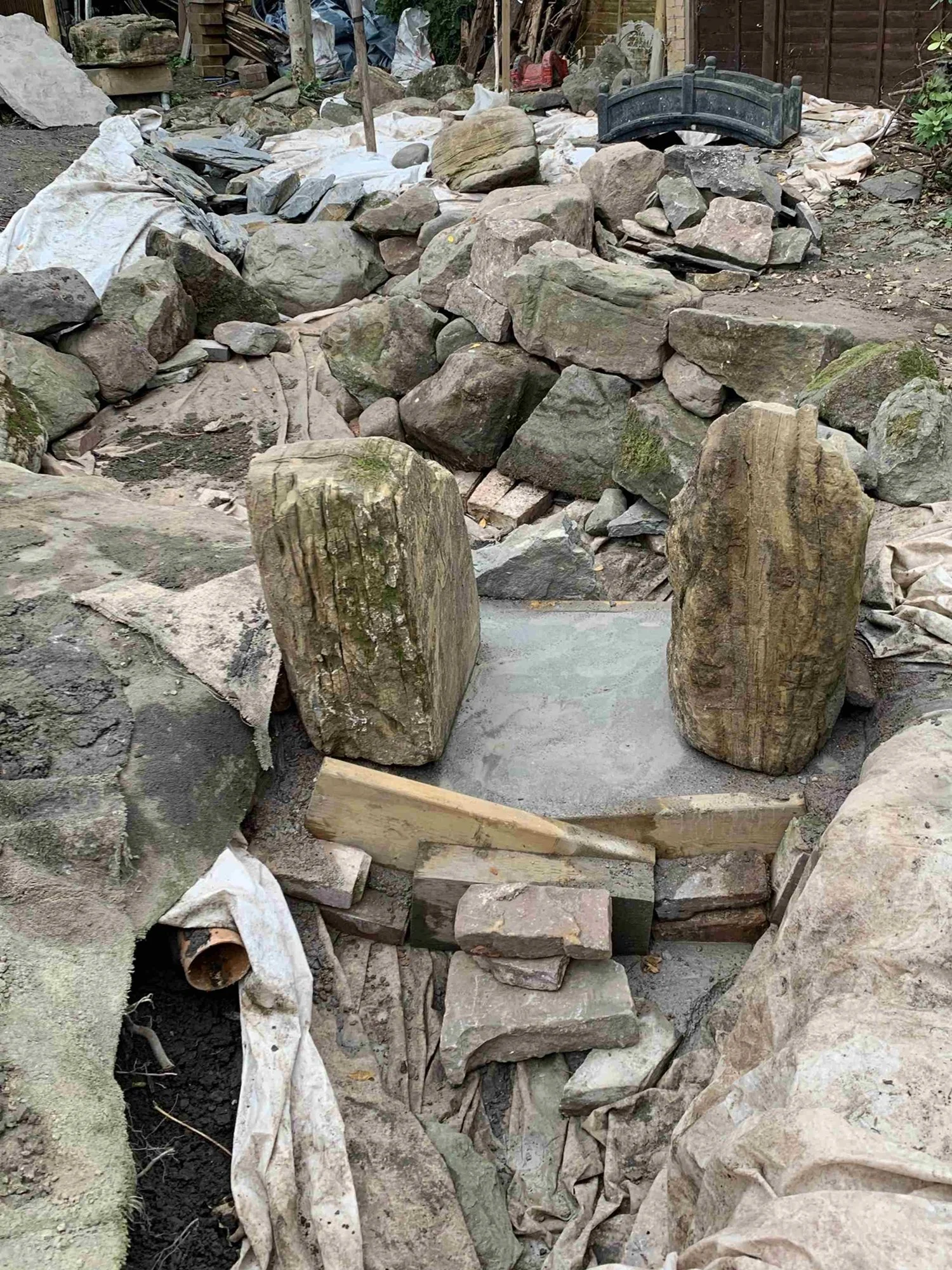
18 months later, the pagoda is up, the dry river bed is built, plants are being planted and what was once an abandoned vegetable patch is well on the way to transformation.
This is the story of a little miracle, and what it will be.
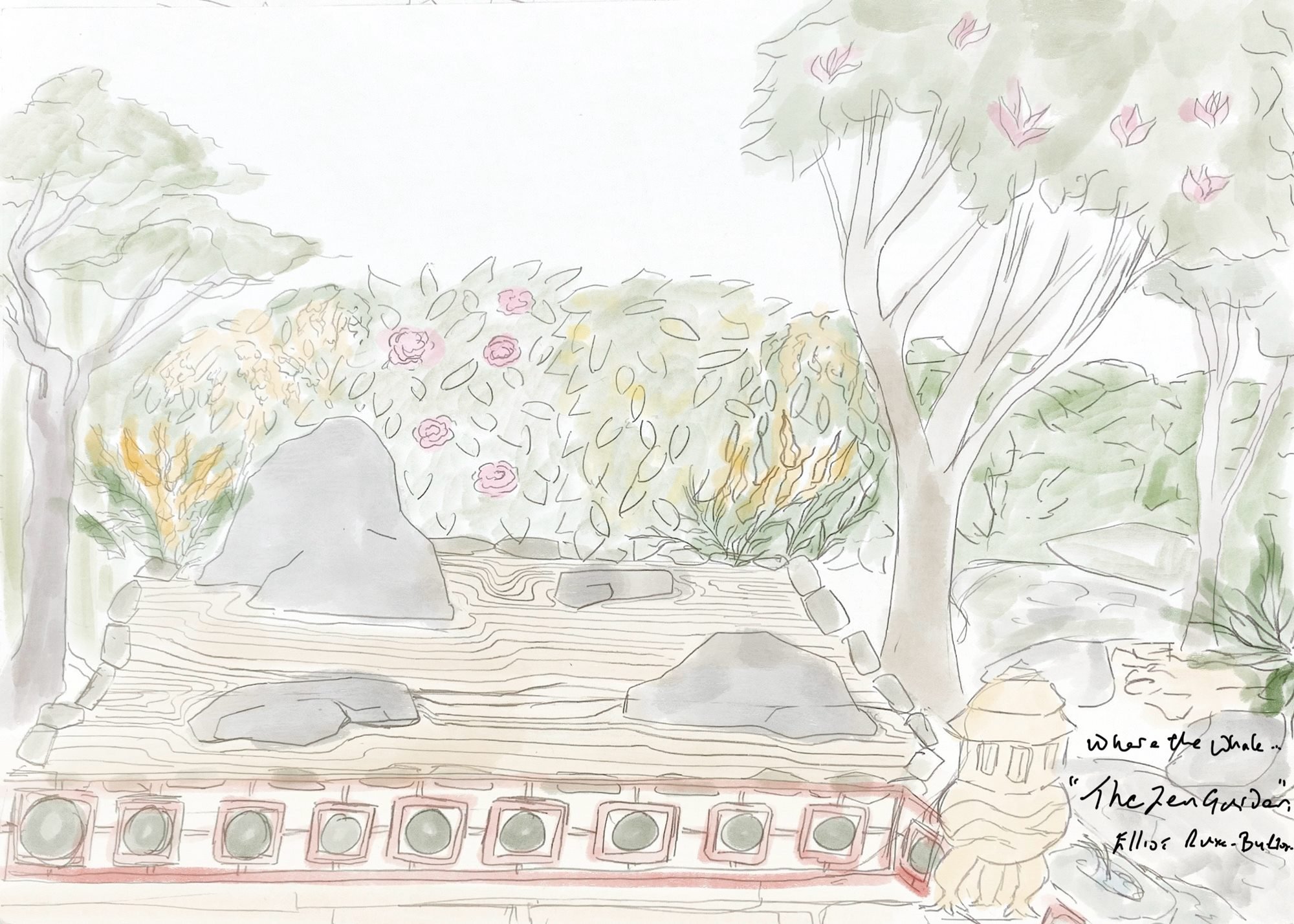
Harmony in Paradox
My garden is a physical manifestation of what might seem a paradox — a space where the man-made and the natural coexist, not in oscillation but in harmony.
Hard physicality reconciles with the symbolic, the mythic, and the imagined.
It is a space where nature is shaped by human hands; where discarded plants and materials are transformed into something wondrous.
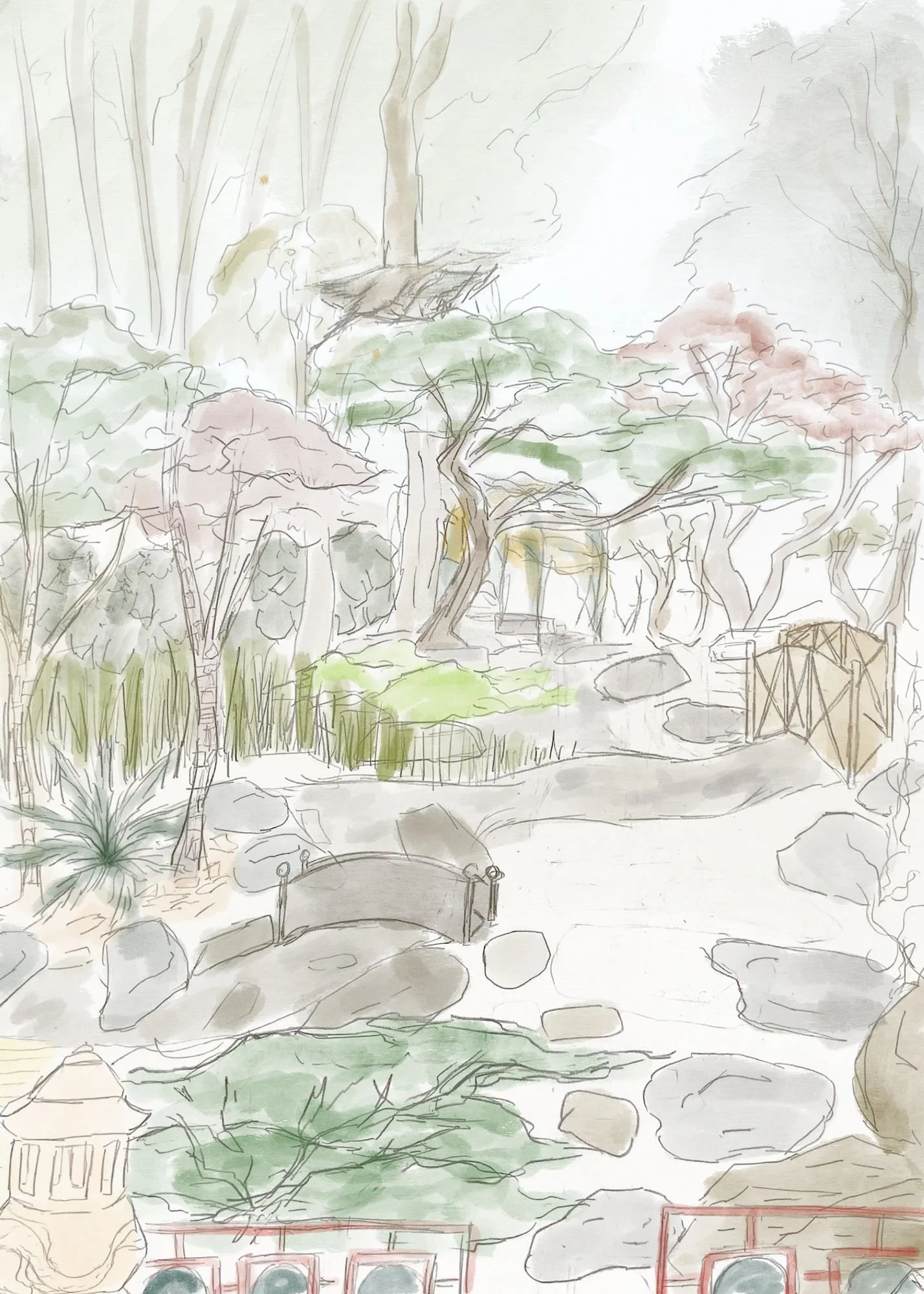
Mitate Mono
The Japanese call this idea mitate-mono (見立て物): to see as things.
It might sound like upcycling, but in a garden the meaning is far more poetic.
Mono attaches to ideas central to what I call topogenesthetics — the study of how a space comes into being, affects the senses, stirs emotion, and acquires human significance.
Mono no aware (物の哀れ) — the pathos of things, the deep sadness in recognising impermanence and beauty.
Mono no ke (物の怪) — the spirit of a thing, the idea that all objects possess vitality.
Monogatari (物語) — literally “things told,” stories that give voice to objects and experiences.
All of these are bound up in mitate-mono.
These are concepts linked to topogenesthetics, a term I use to describe how spaces become imbued with meaning.
Flow of the Universe
At the heart of the garden, a dry stream symbolises flow — the flow of the universe, of life itself.
It is fed by a real spring that fails, then re-emerges at sea beyond a bridge — a metaphor for life, death, and renewal.
Dry streams are central to many Japanese gardens and imbued with great symbolism. They operate at many levels. If you would like to know more about them, and read other articles about the garden, progress and openings, or about topogenesthetics (how a space is imbued with meaning), something important in Japan, but in the neo-classical gardens of 18th Britain too -> join me on Substack.
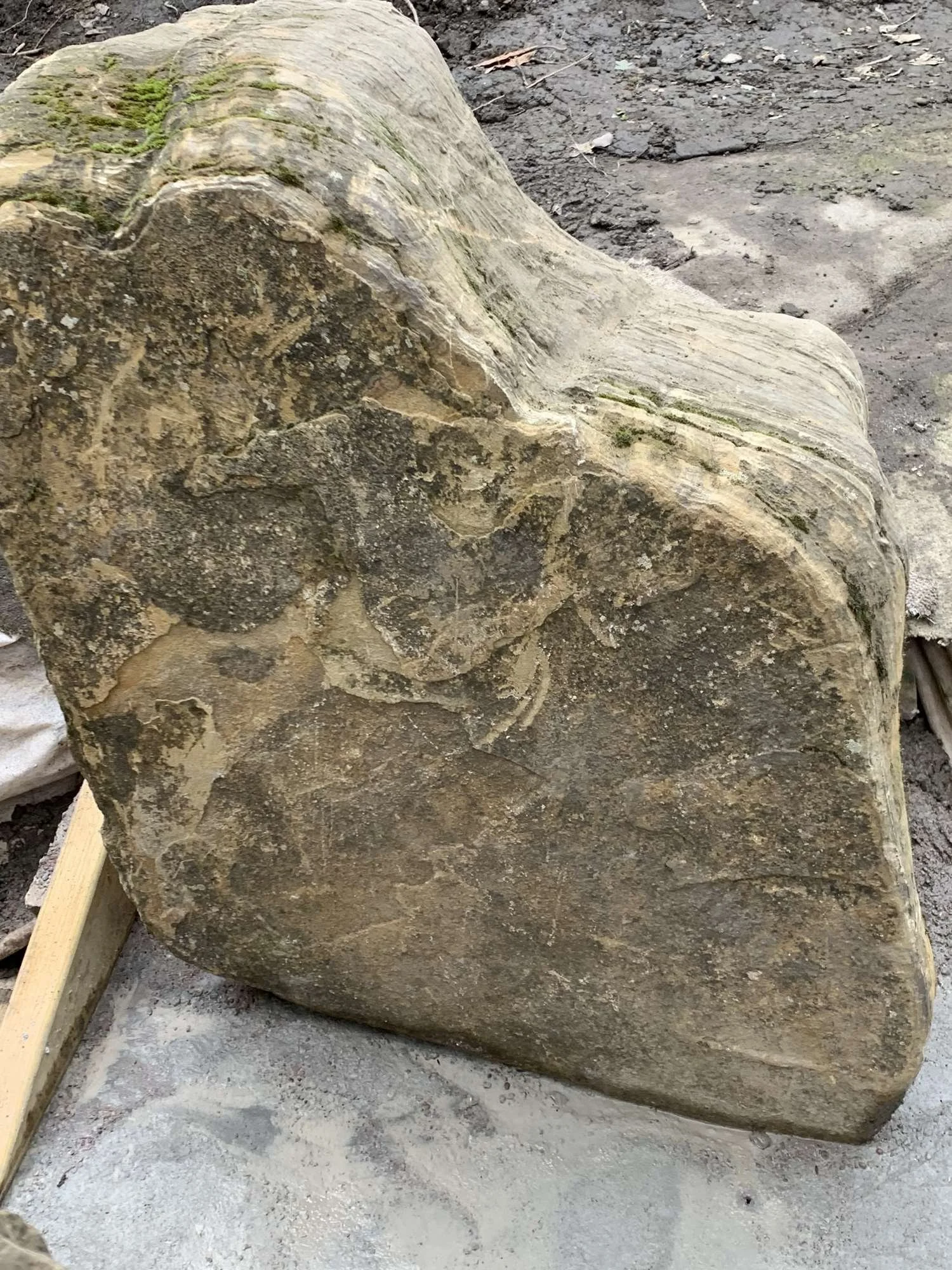
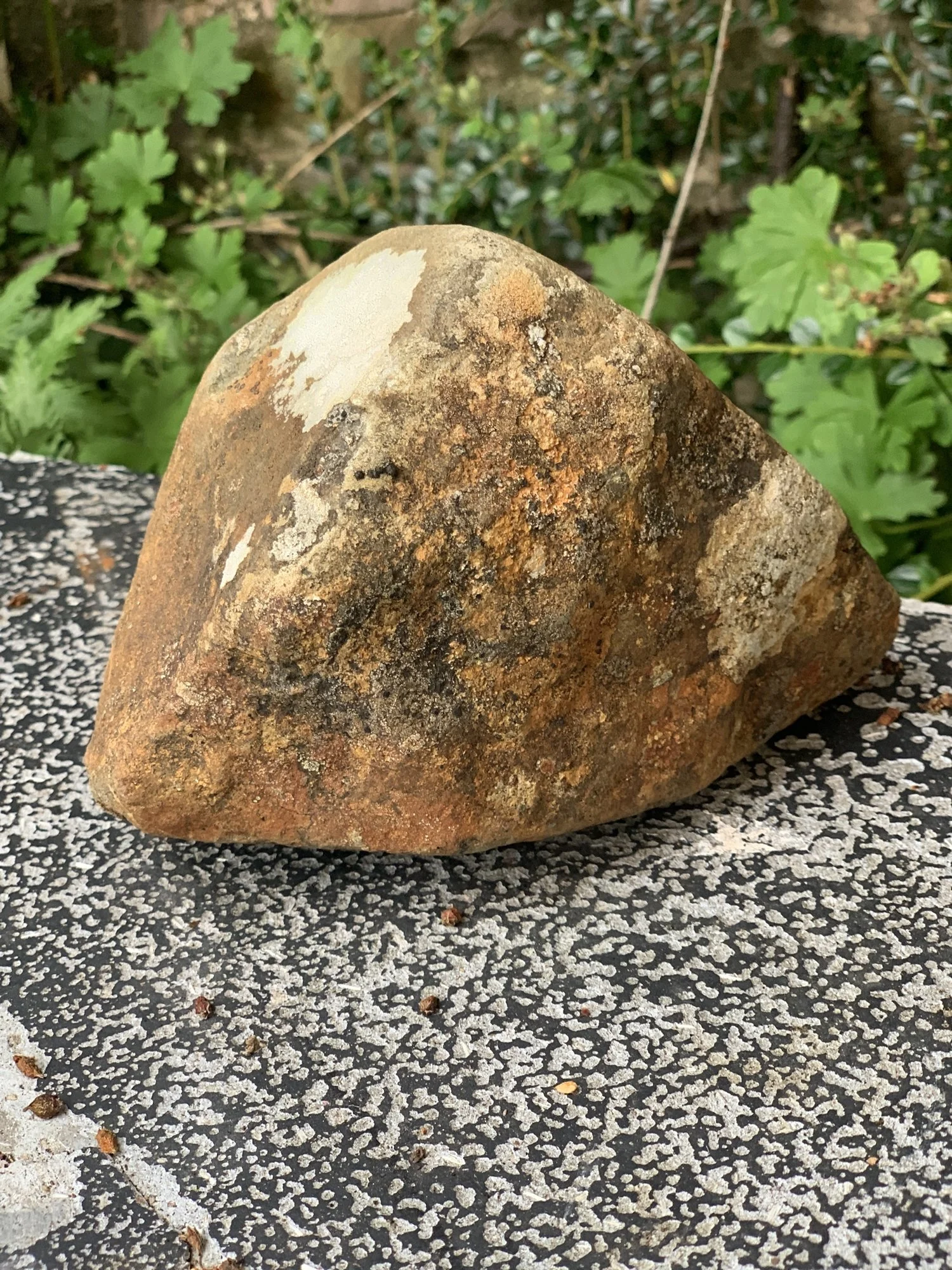
Upon the mountain above rests a whale, born of stone yet leaping from imagination.
Through suiseki — the contemplation of stones — the monolith takes the semblance of a whale in the mind.
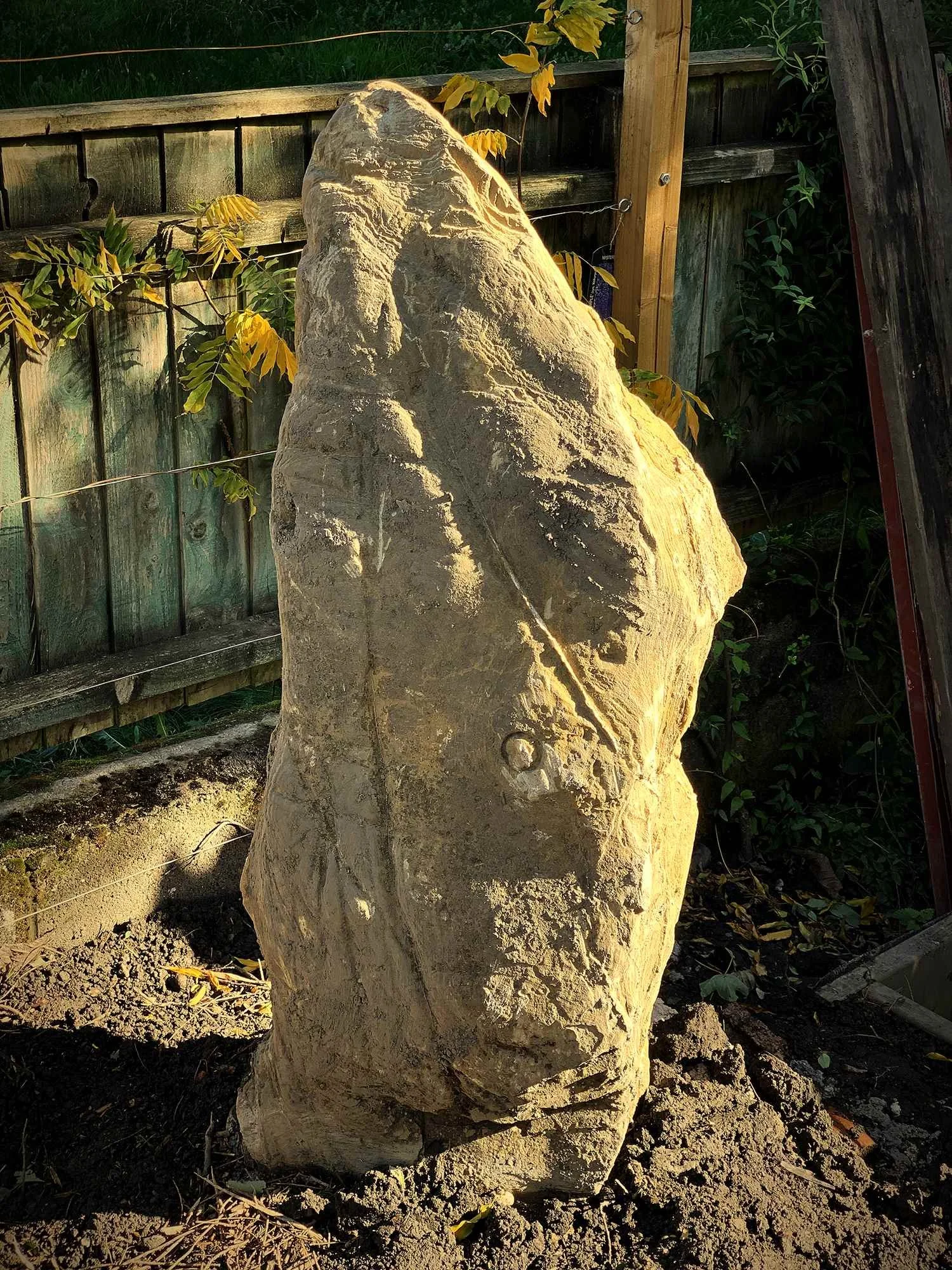
The Whale
Around the whale stand seven more monoliths: an ancient circle, perhaps, or a callandish raised above a dragon’s lair — for this is the Welsh Borders, where the last dragon of Wales is said to sleep.
Or perhaps these stones are reflections of stars in the sea from which the whale rises.
If so, are the rocks not islands but leviathans’ backs?
Do the walls not flow with eels and kelp, the gravel sea a coral bed?
Or perhaps the whale swims among nebulae, the stones constellations of the cosmos.
The garden never insists on one vision; it invites them all.
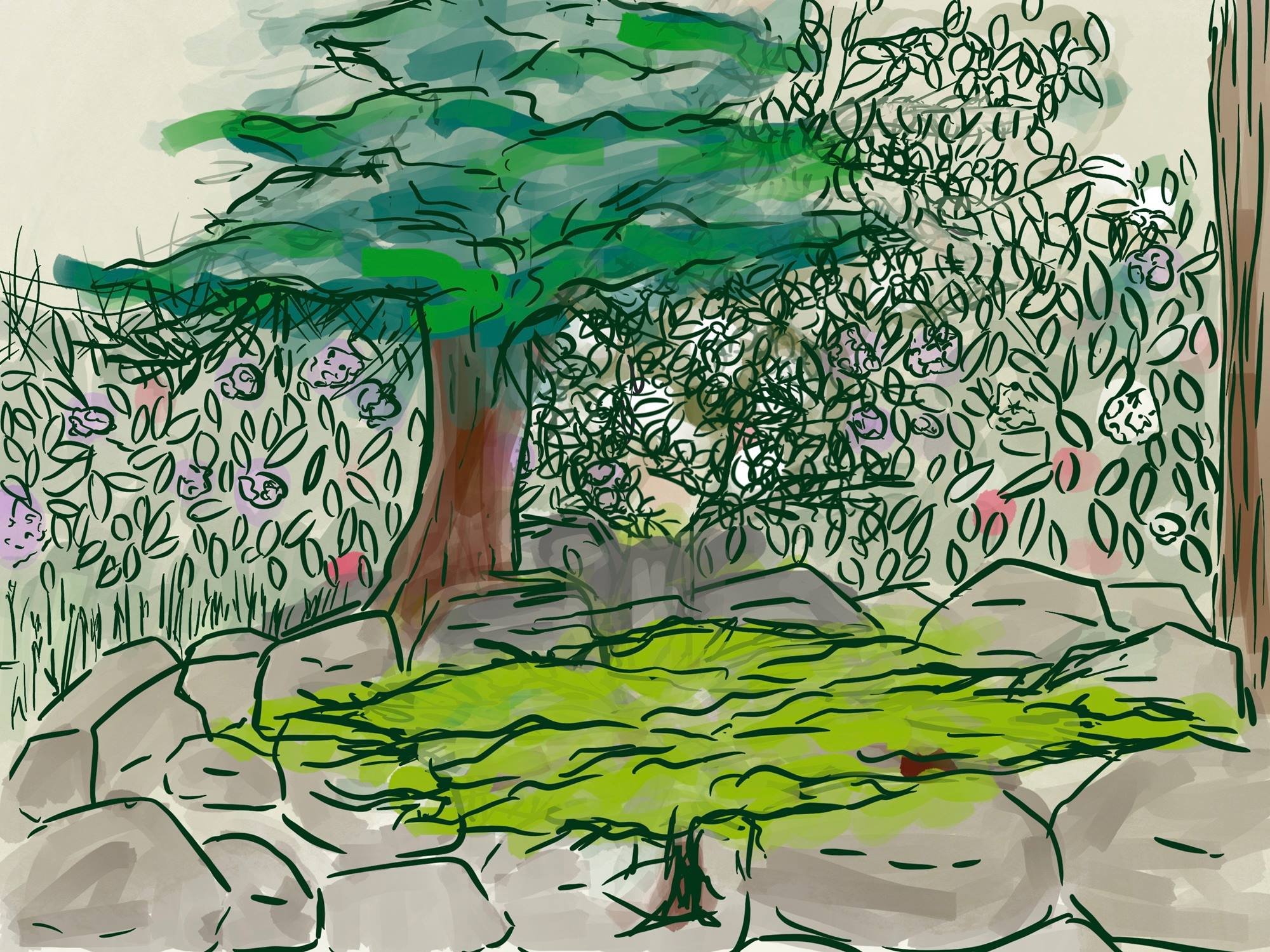
Elements of Time
The elements I reuse — plants, stones, timbers — have, like us, earlier lives.
The gravel beneath our feet began as silt in the Pre-Cambrian era, over half a billion years ago, before the explosion of life on Earth.
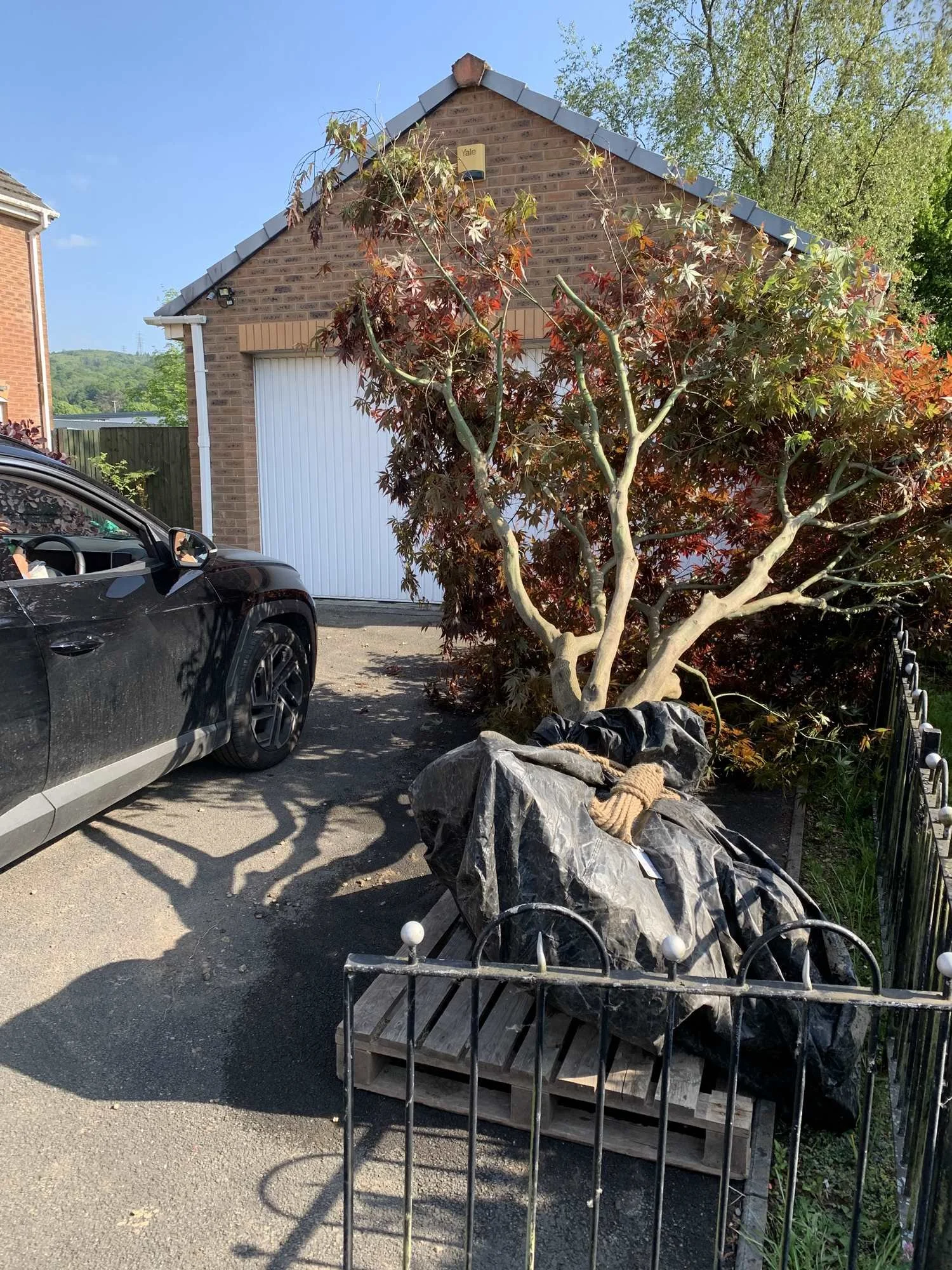
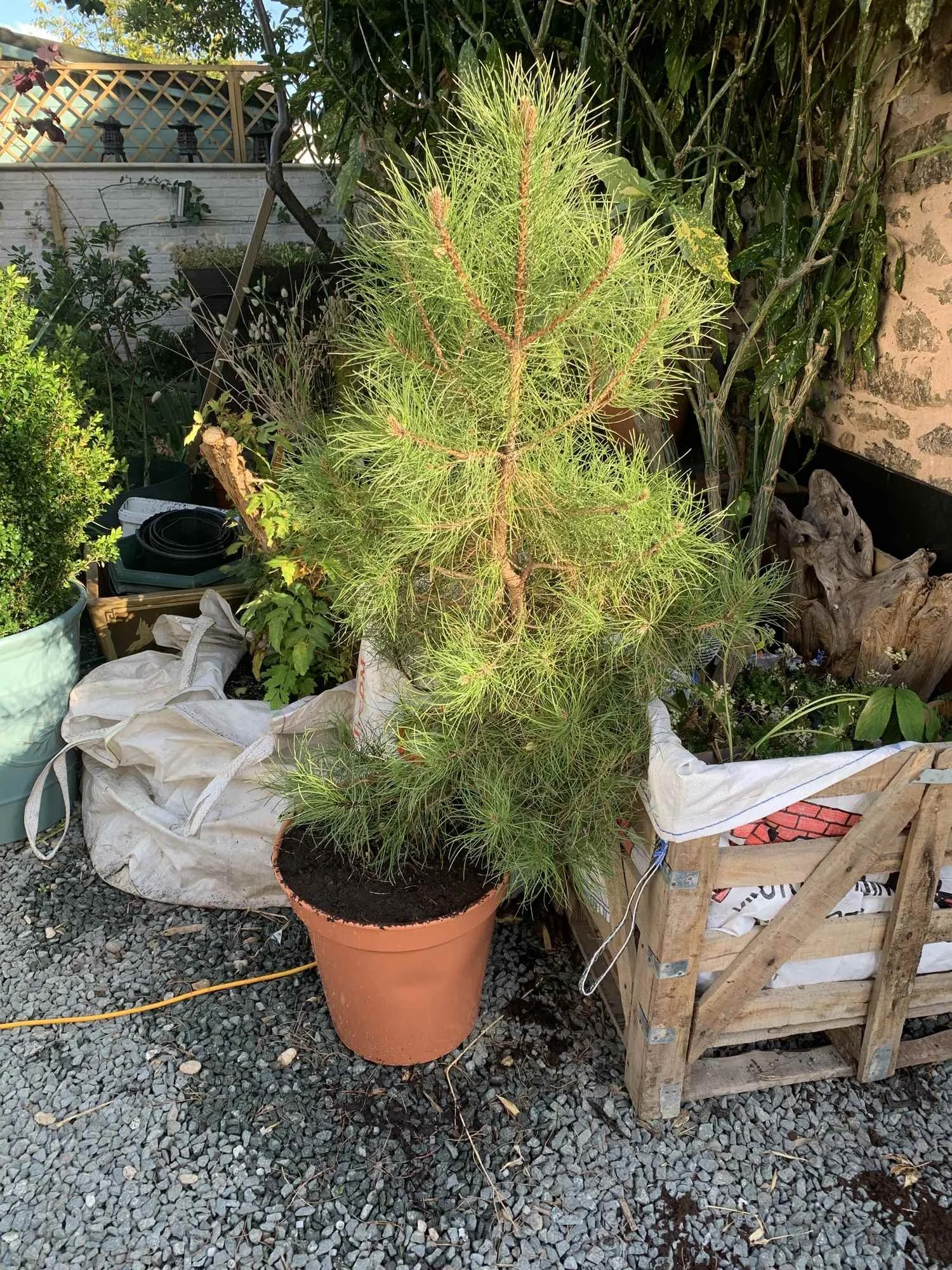
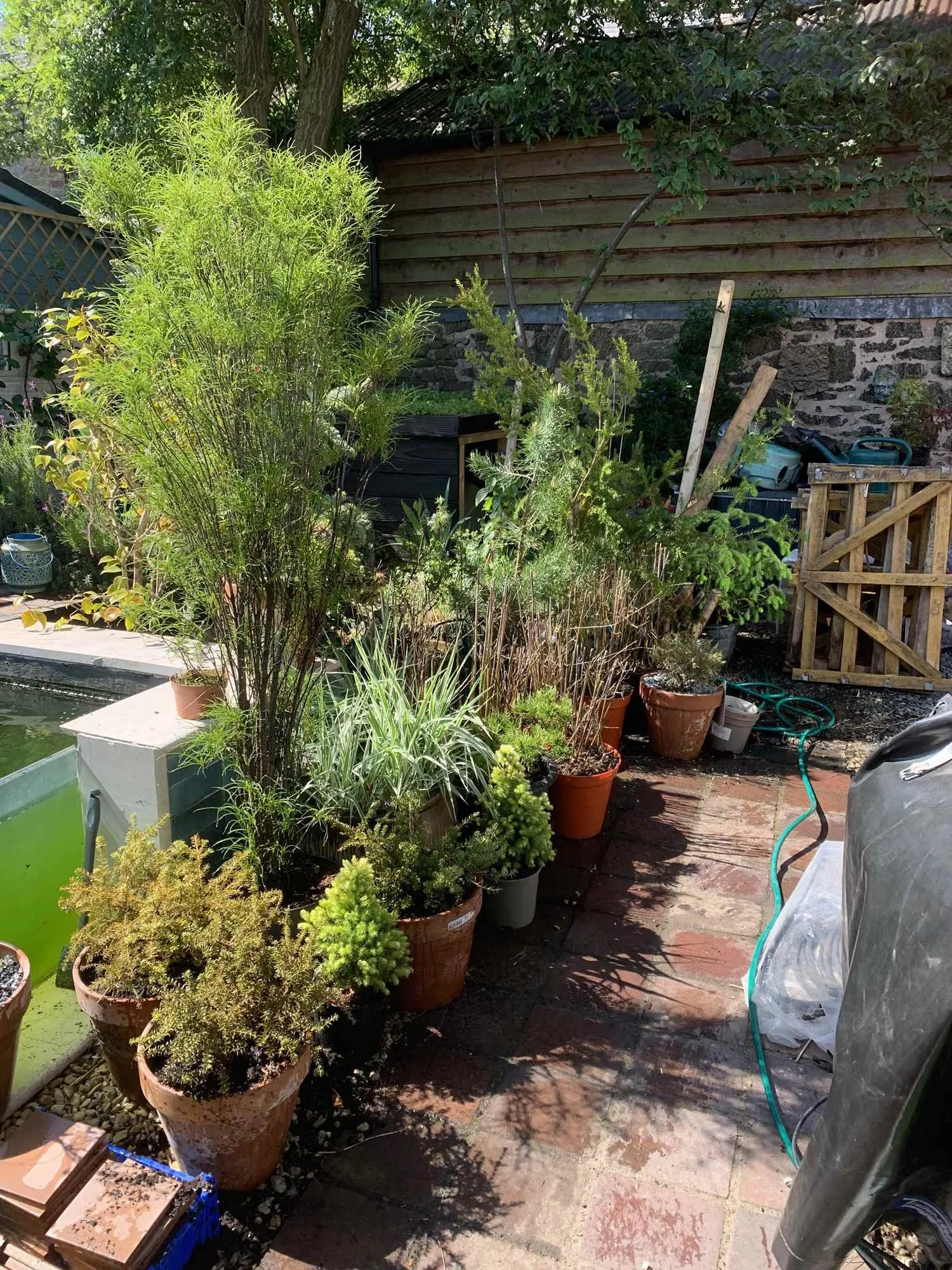
The rescued trees and plants have travelled from across Britain, uprooted with love from driveways and extensions, often because their owners couldn’t bear to see them lost.
They grew from the matter of generations before them, their atoms drawn from the same soil as the stones.
Reuse stops them being mere things; it reminds us of the transience of our lives and the preciousness of, well, everything.
Small wonder that many believe they possess spirits — and no wonder they are seen as things that tell stories, that whisper back to us.
Such simultaneity of space creates simultaneity of time — a realm where infinite meaning and no meaning coexist in a state of never-ending renewal.
The constructed and the natural converse, consuming and remaking one another: an ouroboros.

Why create such a space instead of expressing these ideas in text or image?
Because it is a living space — for writing, for making images, for drinking coffee, and reading about the latest human disaster.
A space to share ideas with others, to commune around that cave-fire and cast great shadows on the wall — and not worry about Plato and his stumblings in the dark.
Importantly, it silences the urge to see a paradox at the heart of my work:
Presence is both object and thought.
This is at the heart of Topogenesthetics, the study of how space becomes imbued with meaning.
The reconciliation of paradox lies in the act of looking — of engagement, of taking part, determined to find meaning, come what may.
It is relevant to what it is to be human, whether expressed through ink on a page, pixels on a screen, or through the stones in this, or any, garden — anywhere in the universe.
Is the garden expressing a spiritual idea?
Not directly — but it is an existential exploration.
Buddhist, Zen, Shinto, and Abrahamic traditions intermingle with pagan echoes, representing humanity’s eternal outreach toward meaning.
No one can assay the universe, weighing infinity against a handful of dust — and what kind of fools but humans would try?
Thus, the intent is both serious and playful.
In the Acer grove stands a Shintoesque shrine to Totoro — a children’s anime deity reverse-engineered into a divine form.
It echoes the question posed in the Sistine Chapel: Is God creating Adam, or Adam creating God — or both?
-> For garden project updates
follow @simulistephimera

Thank You
A mitate garden filled with rehomed plants is impossible without the good-will and generosity of a whole community. Thank you to the people of the Welsh Borders and particularly to the many donors and supporters who made this possible!
(If your name has been omitted, or attribution is incorrect, please get in touch. We want to know and amend the record as soon as possible.)
Special Thanks
Justin Lloyd
Anonymous, they know who they are
Tony Bennett
Rosie Burton
Debbie Campbell and Chris Birch
Barry Lewis
Andy Lowman
Terry and Christine M
Annie McCarthy and Chris Ball
Sarah Pearson
Ceri and David Phillips
Susie Stockton-Link
Freegle
Facebook (begrudgingly, but Marketplace does facilitate recycling)
Tarmac plc
Donors
Chris Bond
Kenneth Bourne
David Cade
Simone Challis
Kerry Clarke
Lailla
Matt Davies
John Edwards
Phil Evans
Jacky Franklin
Lou Habood and Kev Blockley
Tess and Bob Hunt
Adrian
Alyson Lloyd
Dorian Lough
Tanith
David Mayers
Dan McCloud
James Morris
Jackie Nicholson
Kay
Christina and Ryan O'Neill
Linda and Ace Parker
Sheila Ann Pratt
Melanie Price
Julian Robbins
Tony
Fennella Swann
Helen T
Mary Tolhurst
Gwynneth Ullyott
Andrew Watt
Rosemary Welland
Marilyn and Mike Wood
Supporters
Irene Aneri
Mr and Mrs Asraf
Olay Atamanchuk
Julie Bouret
Jennifer Culloty
Carol Dalzell
Lucy Dolphin
Emma Dredge
Ally Edwards
John Garraway
Mandy Goodenough
David Grew
Emma Hallett
Steven Harwood
Paris Hill
AJ Hirst's
Monika Hornett
Hayley Hutton
Rob Isaac
Harsha Jayamanne
Karen Jenkins
Viola Leigec
Michael Lewis
Geraint Llewelyn
Denny and Graham McCullough
Denise and Derek O'Brian
James O'Driscoll
Piotr Pietrzyk
Wally Powell
Matthew Preece
Fay and Pascal Prevot
David Richards
Lulu Roberts
Dave Robinson
Elle Robinson
Michael Rogers
Jo and Anie Stef
Alan Sullivan
Mair Thomas
Olga Vorozhbyt and Micheal Shklovskiy
-> If you can help, or have items or plants you might like to donate, please get in touch.
We are always appreciative.
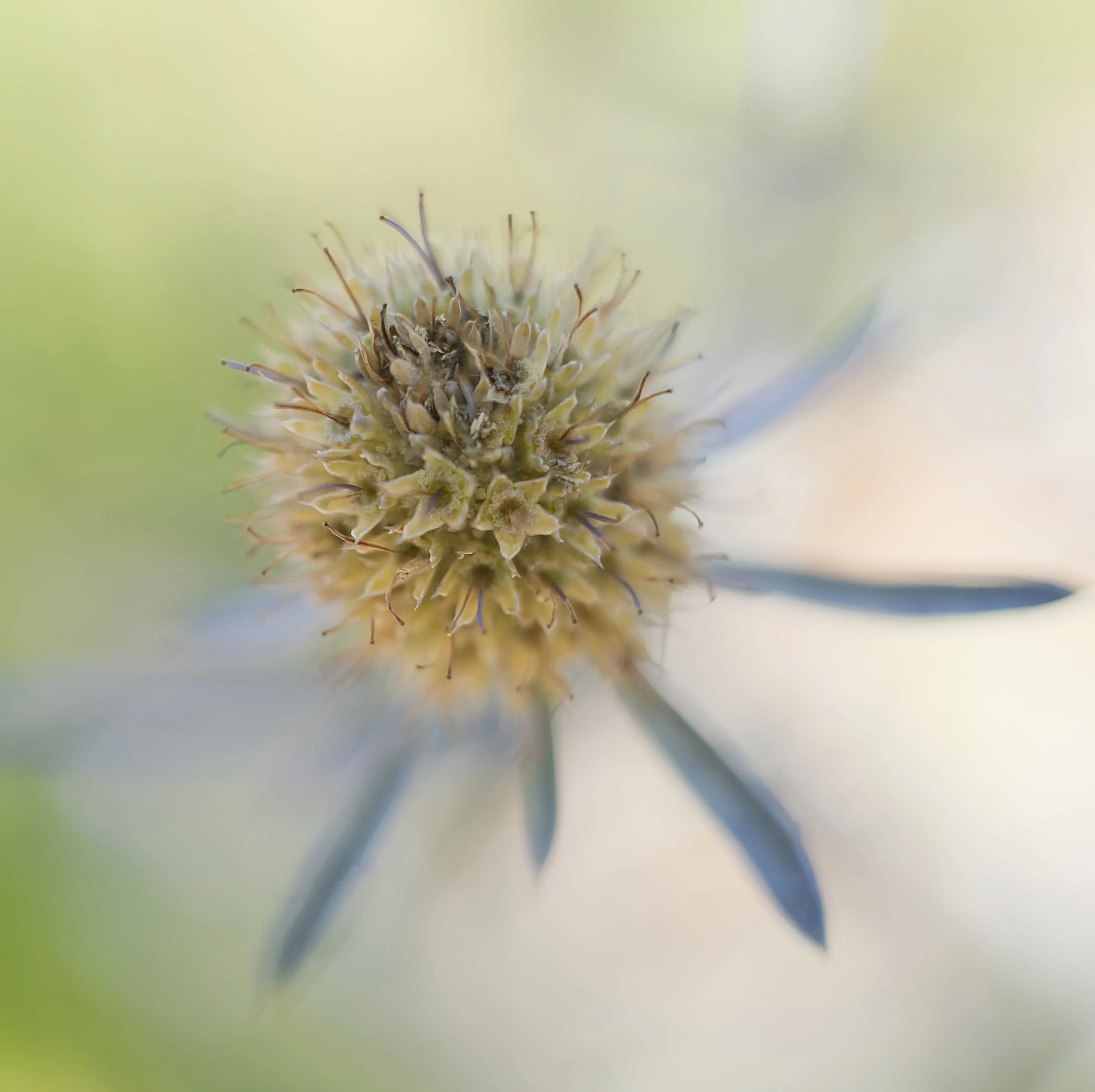
by John Rux-BurtonStar Catcher Haiku
after the stars leapt
whales spoke shimmering questions
so the splash remained