
Digital Mitate Mon∞
Towards a kintsugi of Images

What you are looking at
My images begin as photographs — glimpses of the real, briefly caught through my lens. Then I break them, compelling software to misread and rebuild the fragments; forcing it to mimic the attempt at resolution undertaken by both artist and viewer.
I work in the interval between perception and loss, where images hover between mimesis and abstraction. Human interaction dictates outcome. Mono (物) thing → Ma (間) → Mono myth. In this I recognise an affinity with the Japanese movement Mono-ha — the “School of Things” — which sought to reveal the relations between material and void. My work continues that conversation, not by letting things be, but by letting them become through digital and human misreading — misread, perhaps, in an empirical sense, yet in the Mono-ha manner of tobi-ishi (踏み石), a stepping-stone between material and void, they are not misread at all, but become the blur from which the mind reassembles significance.
Each piece begins as record but ends as question: the visible re-imagined through choice, error, chance, choice, question.
This is an aesthetic of discovering and remaking, the play between the fractured and the human desire for significance. That desire is the tracery of wabi-sabi gold that rebuilds form in the viewer’s mind, a form that is endless possibility, endlessly the wabi-sabi of imperfection — the void and meaning held as one.
But though it is transient, it does not dissolve into diffusion. Every glance reasserts the search for meaning. This is not the effacement that is rinne tensei (輪廻転生), it is the assertion that the self, whilst it can still look, will never slip from the pursuit of meaning, even as it sits on the rim of the void.
I call this Simulism. A new way for seeing. A new way of feeling. A new aesthetic.
![Mono* ma*∞-[3] ~ Mono * ma*∞–[00011]
John Rux-Burton 2025 | Pigment print on archival baryta paper |
150 × 100 cm (image) | Edition of 8 + 2 AP |
All works are pigment prints on archival baryta paper. Each designation marks a process only—each](https://images.squarespace-cdn.com/content/v1/6898d224e61ae2143f55b565/49f345a5-8b1d-4759-b3b1-e62fbb4651bf/Landscape+Infinity+-1.jpg)
Mono* ma*∞-[3] ~ Mono * ma*∞–[00011] John Rux-Burton 2025 | Pigment print on archival baryta paper | 150 × 100 cm (image) | Edition of 8 + 2 AP | All works are pigment prints on archival baryta paper. Each designation marks a process only—each number a provisional coordinate.
![Mono* ma*∞-[10] ~ Mono * ma*∞–[0000001010]
John Rux-Burton 2025 | Pigment print on archival baryta paper
100 × 65 cm (image) | Edition of 8 + 2 AP |
All works are pigment prints on archival baryta paper. Each designation marks a process only—ea](https://images.squarespace-cdn.com/content/v1/6898d224e61ae2143f55b565/c223fc82-3252-45a2-bb23-4d4023f5a5a3/Microscape+Infinity+-+1.jpg)
Mono* ma*∞-[10] ~ Mono * ma*∞–[0000001010] John Rux-Burton 2025 | Pigment print on archival baryta paper 100 × 65 cm (image) | Edition of 8 + 2 AP | All works are pigment prints on archival baryta paper. Each designation marks a process only—each number a provisional coordinate.
![Mono* ma*∞-[12] ~ Mono * ma*∞–[0000001100]
John Rux-Burton 2025 |
Pigment print on archival baryta paper
100 × 78 cm (image) | Edition of 8 + 2 AP |
All works are pigment prints on archival baryta paper. Each designation marks a process only—ea](https://images.squarespace-cdn.com/content/v1/6898d224e61ae2143f55b565/fb3d3148-491b-484e-851e-79bd53da4aeb/Cityscape+1006.jpg)
Mono* ma*∞-[12] ~ Mono * ma*∞–[0000001100] John Rux-Burton 2025 | Pigment print on archival baryta paper 100 × 78 cm (image) | Edition of 8 + 2 AP | All works are pigment prints on archival baryta paper. Each designation marks a process only—each number a provisional coordinate.
![Mono* ma*∞-[2] ~ Mono * ma*∞–[0000001111]
John Rux-Burton 2025 |
Pigment print on archival baryta paper
100 × 65cm (image) | Edition of 8 + 2 AP |
All works are pigment prints on archival baryta paper. Each designation marks a process only—eac](https://images.squarespace-cdn.com/content/v1/6898d224e61ae2143f55b565/c5a4d704-b170-43b0-b80c-d52391934278/Microscape+Infinity+-+3.jpg)
Mono* ma*∞-[2] ~ Mono * ma*∞–[0000001111] John Rux-Burton 2025 | Pigment print on archival baryta paper 100 × 65cm (image) | Edition of 8 + 2 AP | All works are pigment prints on archival baryta paper. Each designation marks a process only—each number a provisional coordinate.
![Mono* ma*∞-[20] ~ Mono * ma*∞–[0000010100]
John Rux-Burton 2025 | Pigment print on archival baryta paper
60 × 42 cm (image) | Edition of 8 + 2 AP |
All works are pigment prints on archival baryta paper. Each designation marks a process only—each](https://images.squarespace-cdn.com/content/v1/6898d224e61ae2143f55b565/9564f8a0-01ef-44ae-9c96-7fbd3bbc32bb/Universion+I+Web.jpg)
Mono* ma*∞-[20] ~ Mono * ma*∞–[0000010100] John Rux-Burton 2025 | Pigment print on archival baryta paper 60 × 42 cm (image) | Edition of 8 + 2 AP | All works are pigment prints on archival baryta paper. Each designation marks a process only—each number a provisional coordinate.
John Rux-Burton, in his studio, discusses his Mono* ma*∞ images, practice, and human/machine perception
AN INVITATION TO EVERY VIEWER
Feel free to message me and tell me about the things you discover in this work.
My practice interrogates where we reveal apparent meaning. Is what a viewer sees in the fragments of photographs I used that remain, the edits I made both in camera and digitally, the AI attempts at making sense of the mass of data I feed it from so many images, or the hallucination of the viewer?
And if, which it surely is, the last of these is key, what does that say both about our far greater ability to make sense of the world compared to AI, but also about the illusions of reality we harbour and how our perception is a continuous imaginary act?
Part of my practice, developing into a film on the phenomenon, is to record the ‘phantoms’ people find in my work. These are the raw evidence of the uniqueness of the human seeing mind. They are a trace to hold on to as we brace our preciousness, perhaps our final bastion, in the face of an AI hegemony.
Development
If you would like to learn more about my development, earlier shows and, explore further Simulist studies (2017-24) and much more interestingly, my projects now, join me on Substack at @simulistephimera
Creating a new aesthetic doesn’t come easy. Like most photographers, I started early. Perhaps with a Russian Zenith aged 8, perhaps much younger, with plasticine which I would keep rolling into a ball of marbled colours. Only took a few decades to get back to that.
In between, before focusing fully on art, I spent over two decades leading international programmes in education and philanthropy, training more than 2,000 people worldwide in communication, engagement, and empathy. Work taught audiences and antiphon: how meaning is created between people, how attention moves, how connection forms, and how emotion can be shaped through detail and perception; visual and spoken.
And I took photographs. A lot of photographs. Some of my more conventional, but competent, images are on this site as banners and anchor points. In 2012 my book From the Marches to the Sea was published, a photo essay charting a journey through the ‘National Park that never was’: Mid-Wales. It sold 2,500 copies and is still in print. The Simulist impulse had already surfaced. In the introduction I wrote of the photographic process of world, maker, machine, viewer: “So a play is created between perception and illusion… and in that space, truly exciting things can happen.”
This artist period culminated in a series of exhibitions. One was with Anne Bromley and Andrew Farmer at the Bleddfa Centre for the Creative Spirit. This wonderful venue, founded by theatre director James Roose-Evans, is now part of the Sidney Nolan Trust. Trustees have included Professor Peter Conradi FRSL and artist-educator David Ferry.
However, it was a show in Melbourne, Hard Earth, and another in the UK, Ghosts in the Machine, that I now realise were fundamental in my journey to Simulism.
A period of experimentation in craft and experimentation in thought followed, which led me to a unique digital process and a new way of looking. It was predicated not on answers, but questions, on inviting viewers to relish the act of seeking meaning. My art became question not statement. That was the point. To provide to the viewer the stimulus that would excite their desire to look deeper into the work for answers and, in so doing, ignite a pareidolic response; in fact many pattern-making responses. I called this new aesthetic Simulism.
In 2017, I produced the first work I now recognise as Simulist; human ontology became a ghost within the binary process and my hallucinated meaning as I took the shot, and the answering hallucination I invoked in the machine, created a new language: an aesthetic where a hallucination could be offered to the viewer, partial and fragmented, one that offered promise but not resolution, and the viewer’s desire to shape meaning could hallucinate a reply.
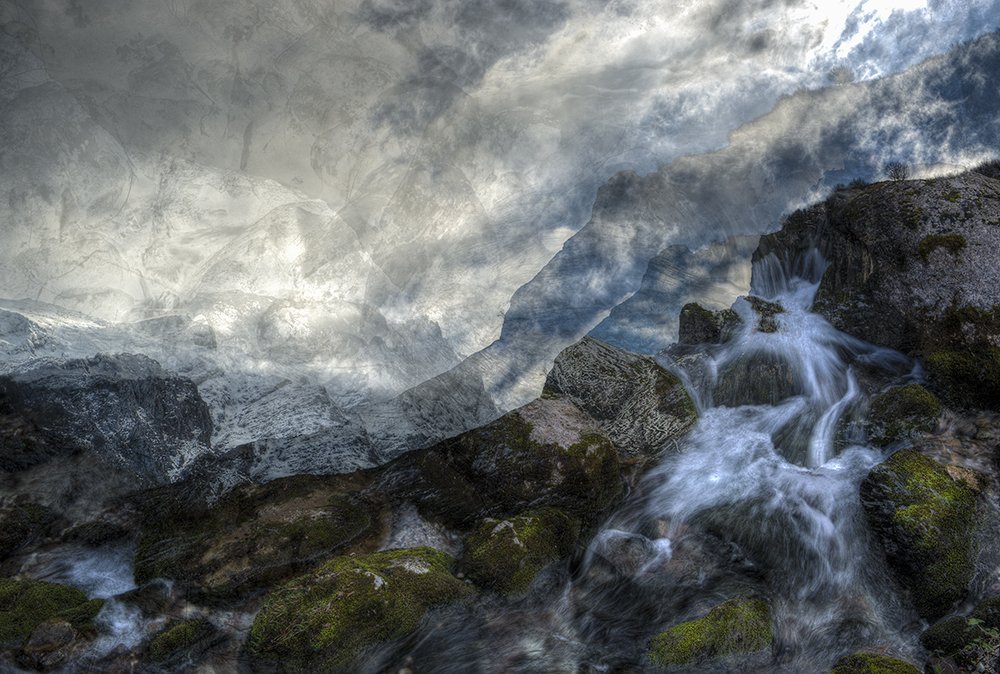
Simulism entails ramifications far beyond art, akin to the impact of the sublime did in the 18th Century, but it is an idea that can be simply expressed: Human meaning arises, not in a universal truth or objective reality, but in the act of searching for it; searching for it, even though one knows that the search must inevitably fail. Thus, what is ‘found; is always a provisional. That is entailed in its definition: if the search were successful, we would cease to be human. It determines that humanity is not destined to find answers other than had fact, but, instead, simply more questions. Simulism offers the infant ‘why?’, the ‘what is that?’ ‘the but’ stretching to infinity, not in an unsatisfying way, but with joy at the opportunity to take part in what humans do so well, make myth.
I did not experience sudden metamorphosis in coming to this view. I now realise the path was akin to well-placed tobi-ishi (飛石): each step was on route to force a particular progress. tobi-ishi (飛石) are so perfectly placed that each effect the right step to the next. Similarly, life places questions that entail new ones.
These are two of my early stepping stones: Hard Earth and Ghosts in the Machine.
-> For news, images and reflections
follow @simulistephimera
Hard Earth (2012)
by John Rux-BurtonThis was a show I did in Melbourne with the assistance of the Centre for Contemporary Photography, who helped me curate the images and provided the expert printing. It was put on in a city-centre office building during Art Week.
The series examined the rock faces of the Flinders Ranges, in the area of Wilpena Pound. That area is part of the Adelaide Geosyncline basin. Some of the most complete fossil records that evidence early life have been discovered there: the development from single-celled to complex, multicellular organisms.
It is also a place of ancient people. I acknowledge the Adnyamathanha people, who have lived here for tens of thousands of years, and the influence upon me of the work of their ancestral artists. I visited Arkaroo Rock, with its extraordinary images (mere babes at five thousand years old) in ochres ground from the earth. I was struck by how these people created significance through and upon the materials of their environment. I do not suggest that was an aesthetic act, wholly or even primarily, I simply cannot say; it is probably not too presumptive, however, to consider that a significant motivation was pragmatic: maps and explanations that were vital in surviving this land. But everyone has their tobi-ishi (飛石), which are their own. They are personal and should be respected as such.
In this series, I wanted to undertake my own journey into the same material, earth pigment, in its raw state, stone. In one’s path as an artist, it’s not unusual to find that tobi-ishi (飛石) step to and fro through time, or on paths less travelled to negotiate the rocks that stand in the way of thought. Here rocks provided a path in mine.
In the outcrops in this land (a harsh land in a European’s eye particularly) I found recorded pareidolia. If you find ‘recorded’ an odd term, I do suggest that within every meaningless thing is meaning waiting to be revealed by human intervention. Such is our ontological desire that, on encountering any object, we find patterns already there upon which we can lay meaning — as if recorded in advance. They are not, of course, recorded in advance; but our desire to make meaning encounters them as if their eternal presence were a gesture toward a universal significance. Without presuming an understanding I do not have, I stared with very different eyes, yet I share with these ancient people the universal human experience of response to stimulus and trying to understand what it means.
In these stones I saw the ochres paint an infinity of possibilities: maps, satellite images, distant galaxies, ancient colonies like those of emerging life all those billions of years ago. It was one tobi-ishi (飛石) on my path to Simulism.
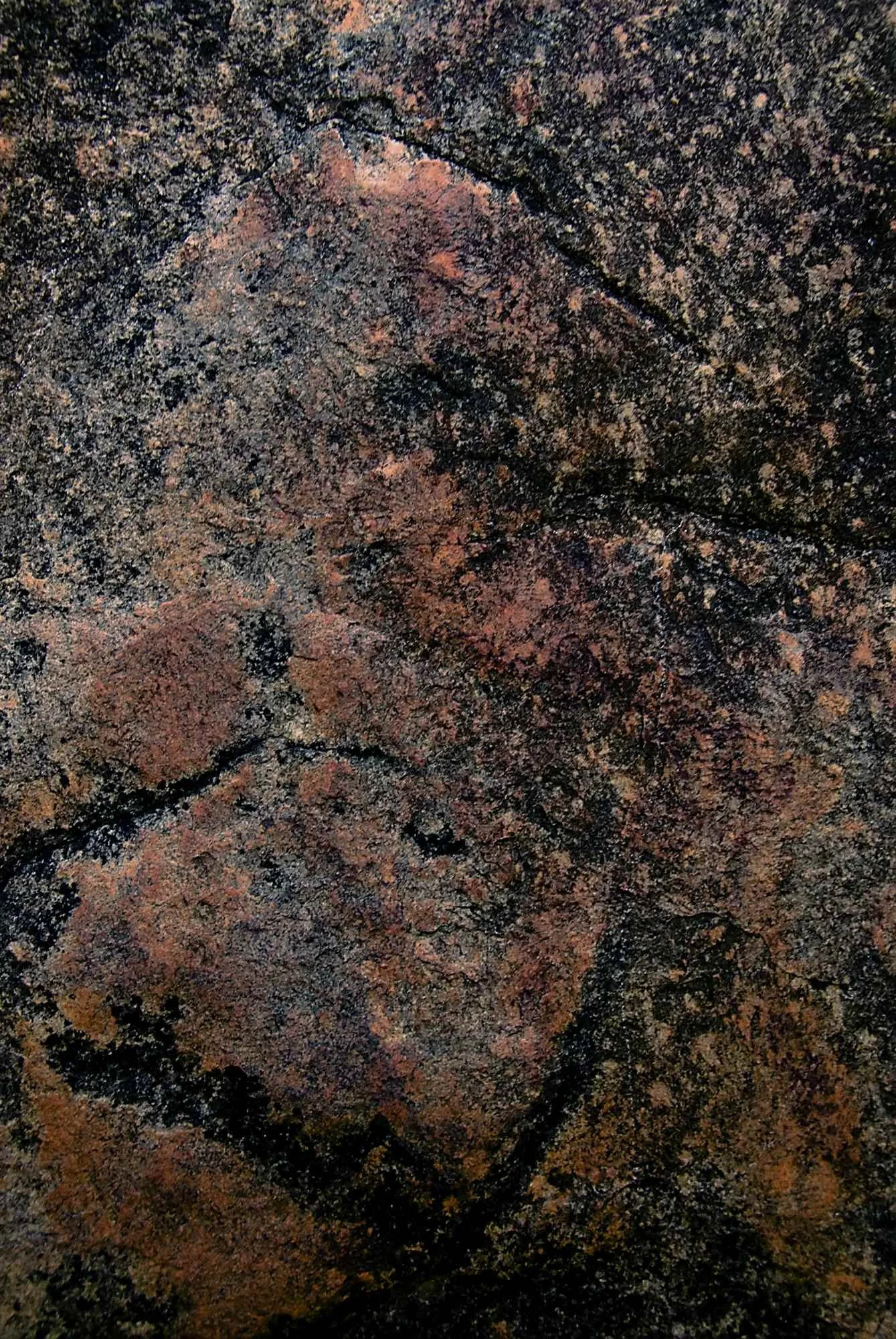
Hard Earth I (2012) John Rux-Burton | Pigment print on matt baryta paper | 100 × 66 cm | Edition of 10 + 2 AP
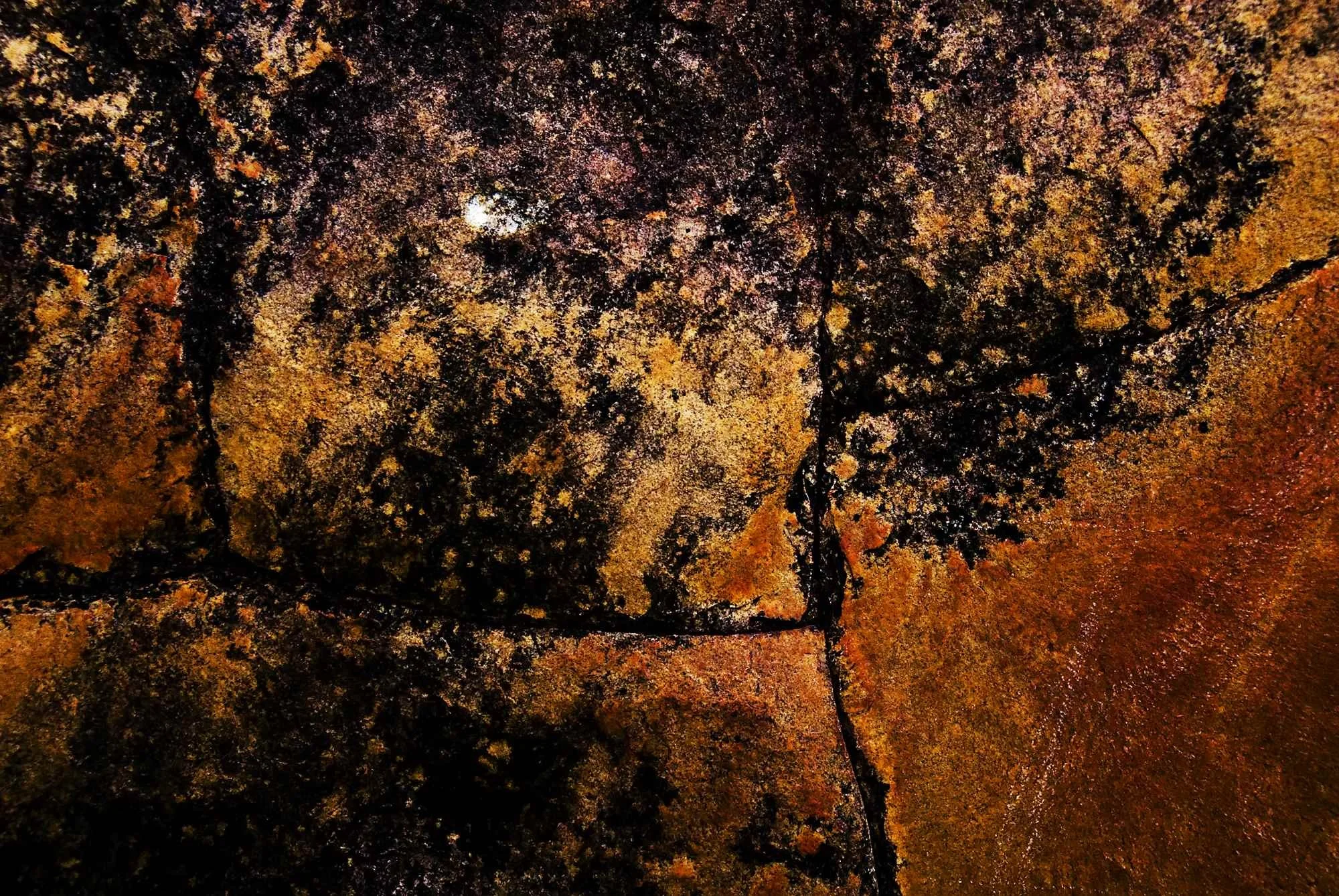
Hard Earth II (2012) John Rux-Burton | Pigment print on matt baryta paper | 100 × 66 cm | Edition of 10 + 2 AP
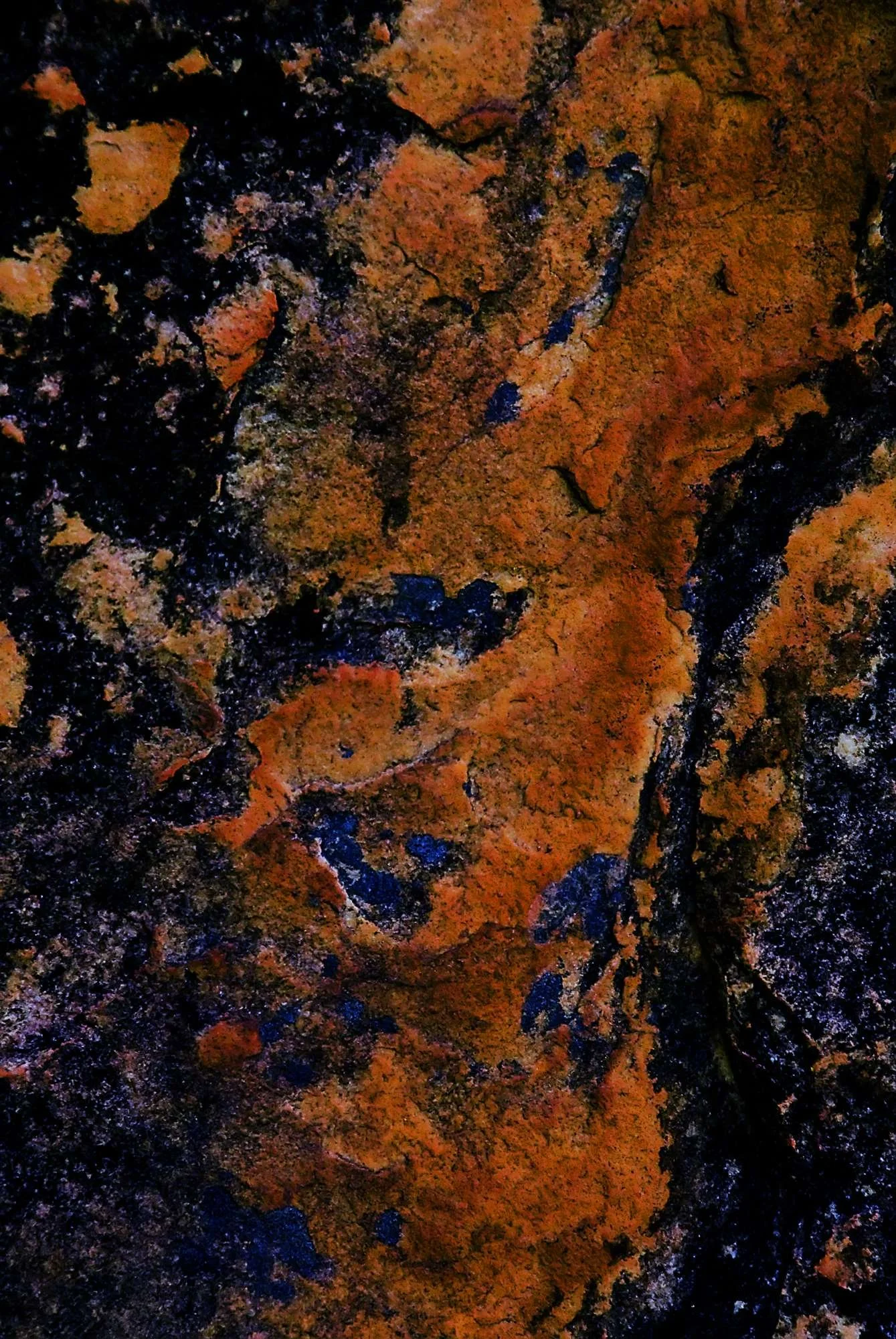
Hard Earth III (2012) John Rux-Burton | Pigment print on matt baryta paper | 100 × 66 cm | Edition of 10 + 2 AP
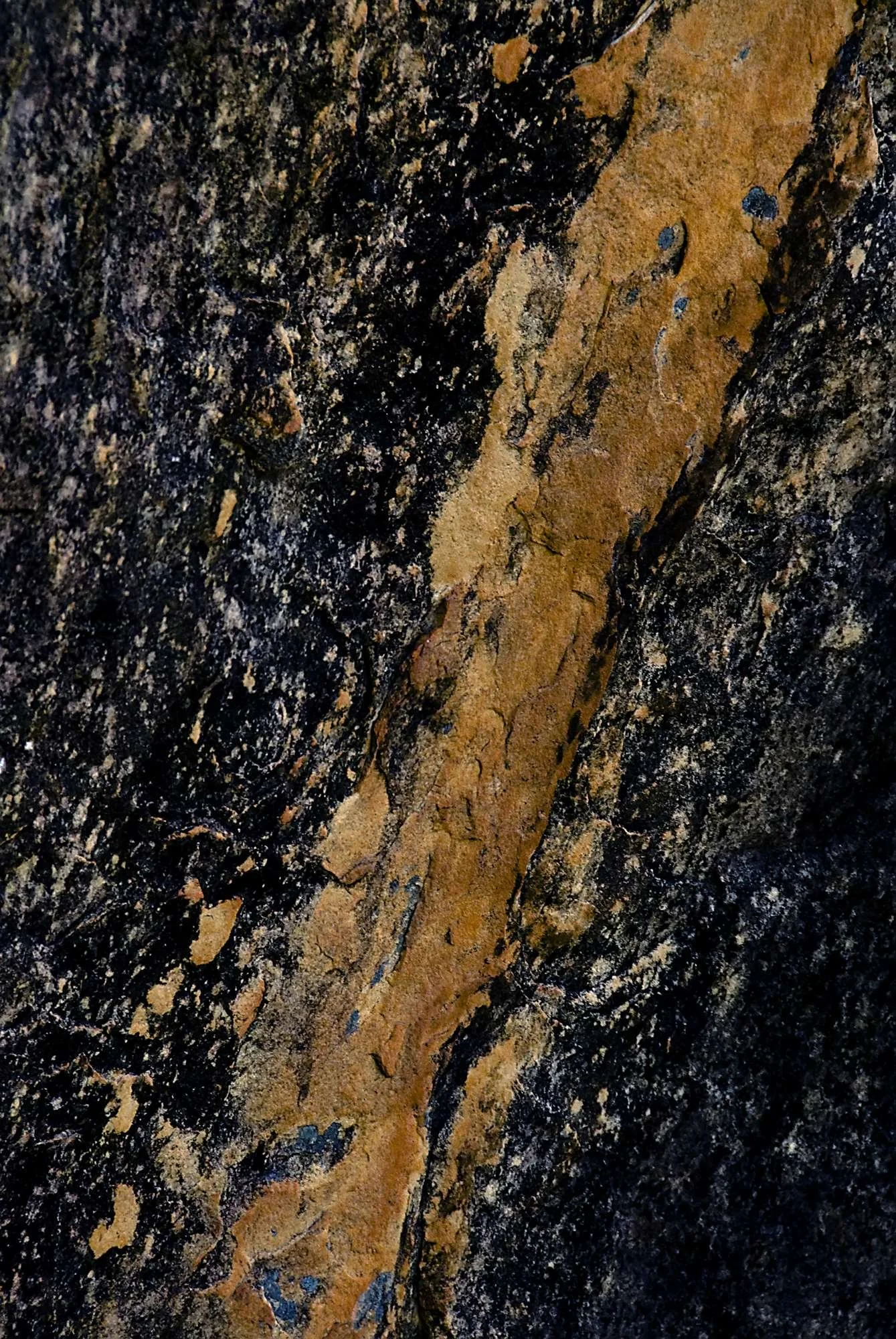
Hard Earth IV (2012) John Rux-Burton | Pigment print on matt baryta paper | 100 × 66 cm | Edition of 10 + 2 AP
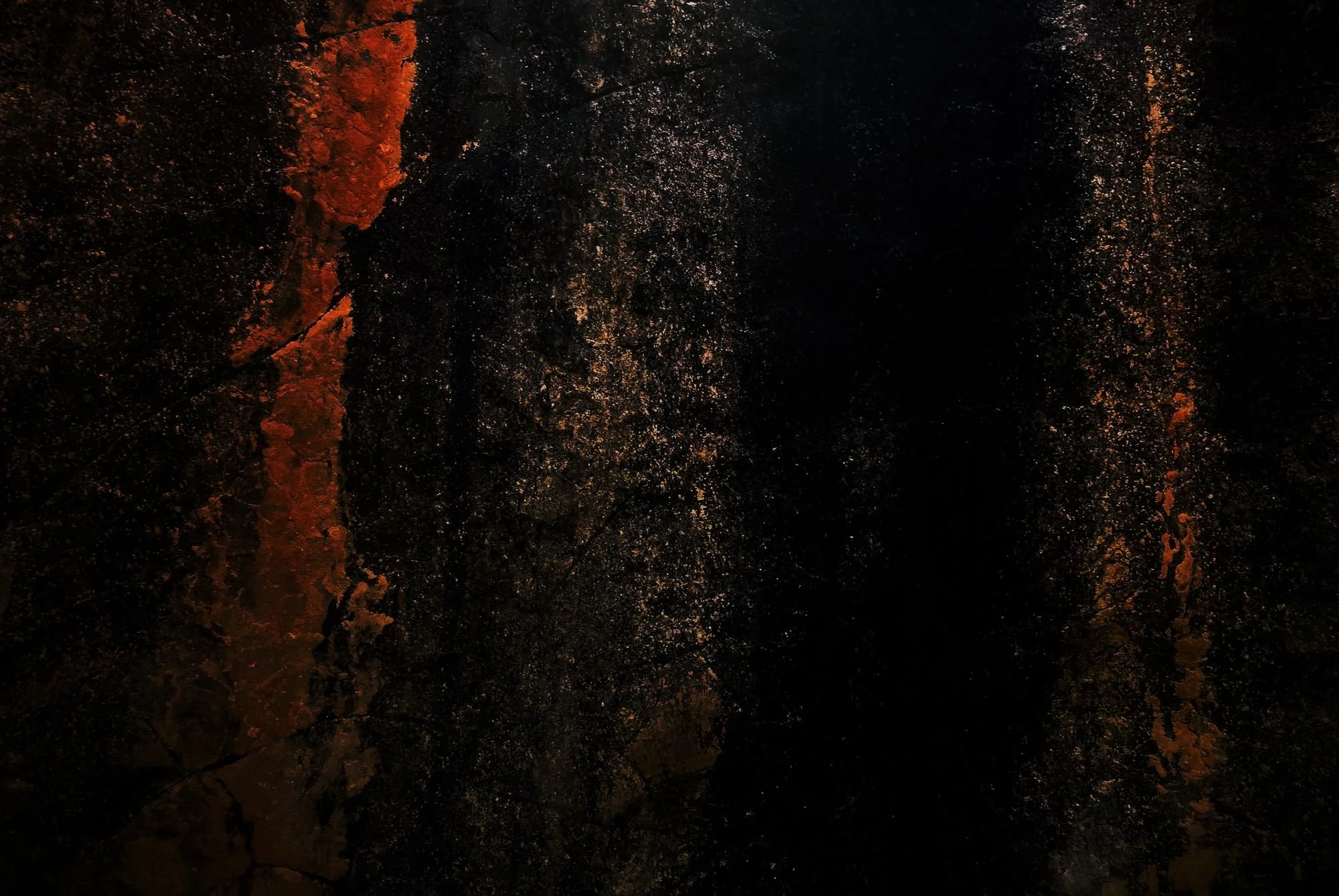
Hard Earth V (2012) John Rux-Burton | Pigment print on matt baryta paper | 100 × 66 cm | Edition of 10 + 2 AP
Ghosts in the Machine (2012)
by John Rux-BurtonAnother show took place, in the same year, on the other side of the world. I was part of a mixed exhibition at the Apple Store Gallery in Hereford, a particularly fine and adventurous regional space.
Today, the irony does not escape me, given its influence on my work, that Melbourne and Herefordshire are two places so important in Sidney Nolan’s practice. He is an artist who confronts a harsh physical reality in the Australian landscape and rises to the mythic in his response. In Herefordshire, he makes cosmic landscapes that do not afford answers but do exhibit the Simulist reflex to ask why, again and again.
Around the time of my visit to Australia, maybe on the same trip, I visited China. That is an ancient land too, but one emerging, if not already emerged, into modernity at a rate faster than a maglev train. I was struck by many things, too many to record here.
I do not undertake a consciously structured process in what I choose to shoot as fine art — or at least not a conscious, linguistic one. When I visit or shoot somewhere new, I don’t pick up a camera for two or three days. I am deliberate in not trying to see anything. First must come a visceral induction into the space — an aesthetic empathy arising from experiencing the space, not interrogating it.
Merleau-Ponty talked of letting the world look back. But Bashō nailed that long before, and Sesshū Tōyō before him, in his notion that to paint bamboo, become bamboo. The Japanese call this chokkan (直観): intuitive perception. If we had the records, we’d doubtlessly find such perceptive thoughts have struck humankind since the awakening of sentience. They are at the heart of the Simulist urge: that ontological desire fulfilled through obtaining the spirit of a thing — or mono, as the Japanese so perfectly express it, where thing is not simply thing, but everything contained in that thing.
Is it a linguistic coincidence that mono is singular in English? Perhaps. Or maybe it is onomatopoeic: mon — such a long, neutral sound, and then the O like a question, like the surprise within Oh. Just a thing, then something more.
This process of painting, or in my case photographing, the object by letting it lead me, brought me to the kaleidoscope of signs, colours, materials, and speed of the travel networks of Beijing, Nanjing, Shanghai, Hong Kong, and Suzhou.
Perhaps, on reflection, it is telling that these seemingly mundane transport networks demanded my attention, especially in Suzhou — a place of truly extraordinary, to a Westerner medieval, gardens. I took nice pictures of those, of course. But it was not there I found intrigue. I now realise it was the pictures I took of transport spaces that were themselves the journey — another tobi-ishi (飛石) on my path to Simulism. And the distortions I observed, pushing the processing power of my Nikon in ways it was not designed (or at least the way cameras were originally designed to be used) produced slippage in mimesis. Not the slippage I achieve today, but it was a start.
The images that arose are filled with reflections, disruptions, and long exposures that blur movement and fracture any attempt at a single reality.
I find it intriguing that through a culture fifty thousand years old and technology at the cutting edge of human achievement, I found two stepping stones to Simulism. Such is the tobi-ishi (飛石) of thought — and of life.
I offer them to you here: my own marks in digital ochre on the cave wall. They act as maps to something else — to a place where the game may, with sufficient skill and effort, be found.
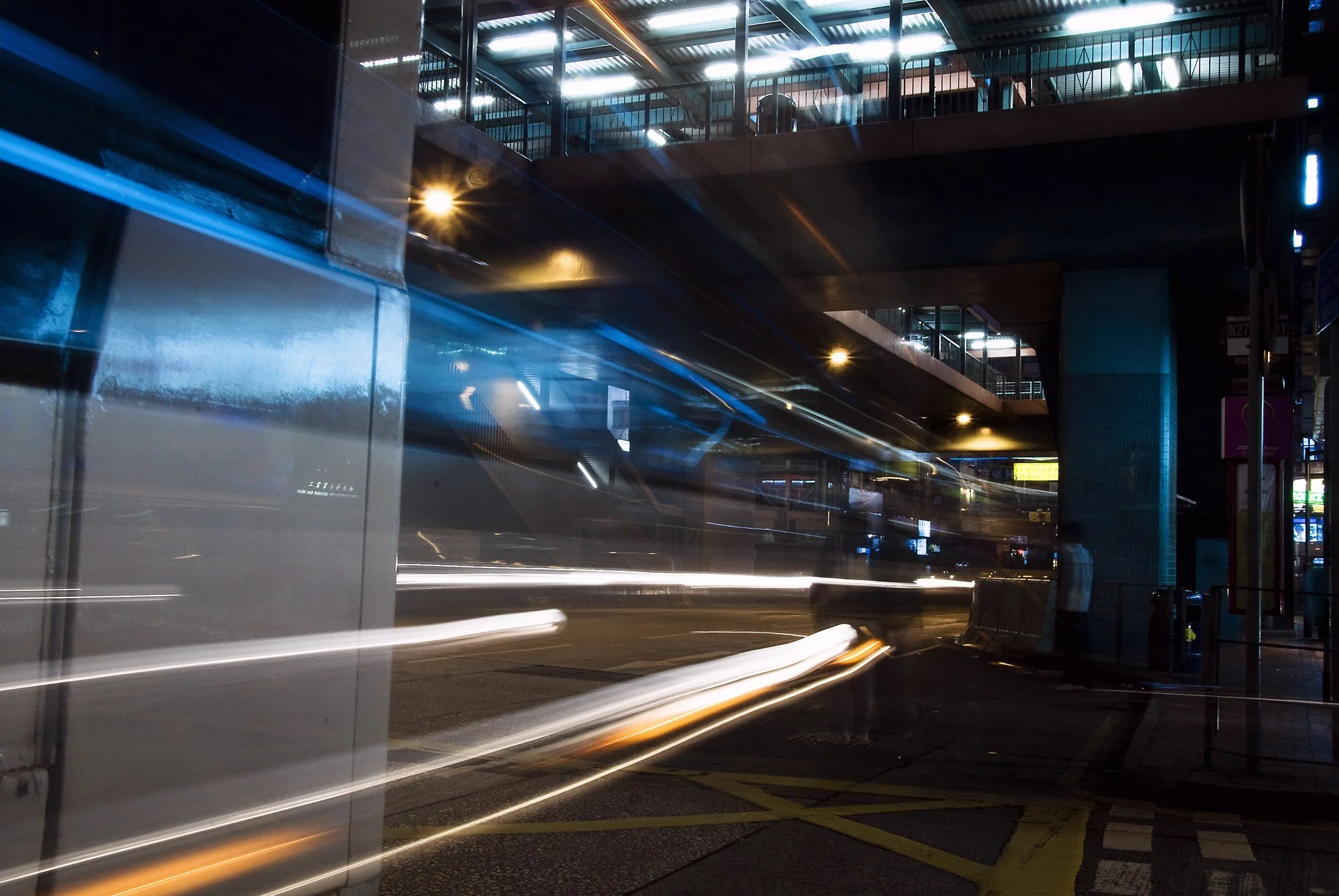
Ghosts in the Machine I (2012) John Rux-Burton | Pigment print on gloss baryta paper | 60 × 40 cm | Edition of 10 + 2 AP
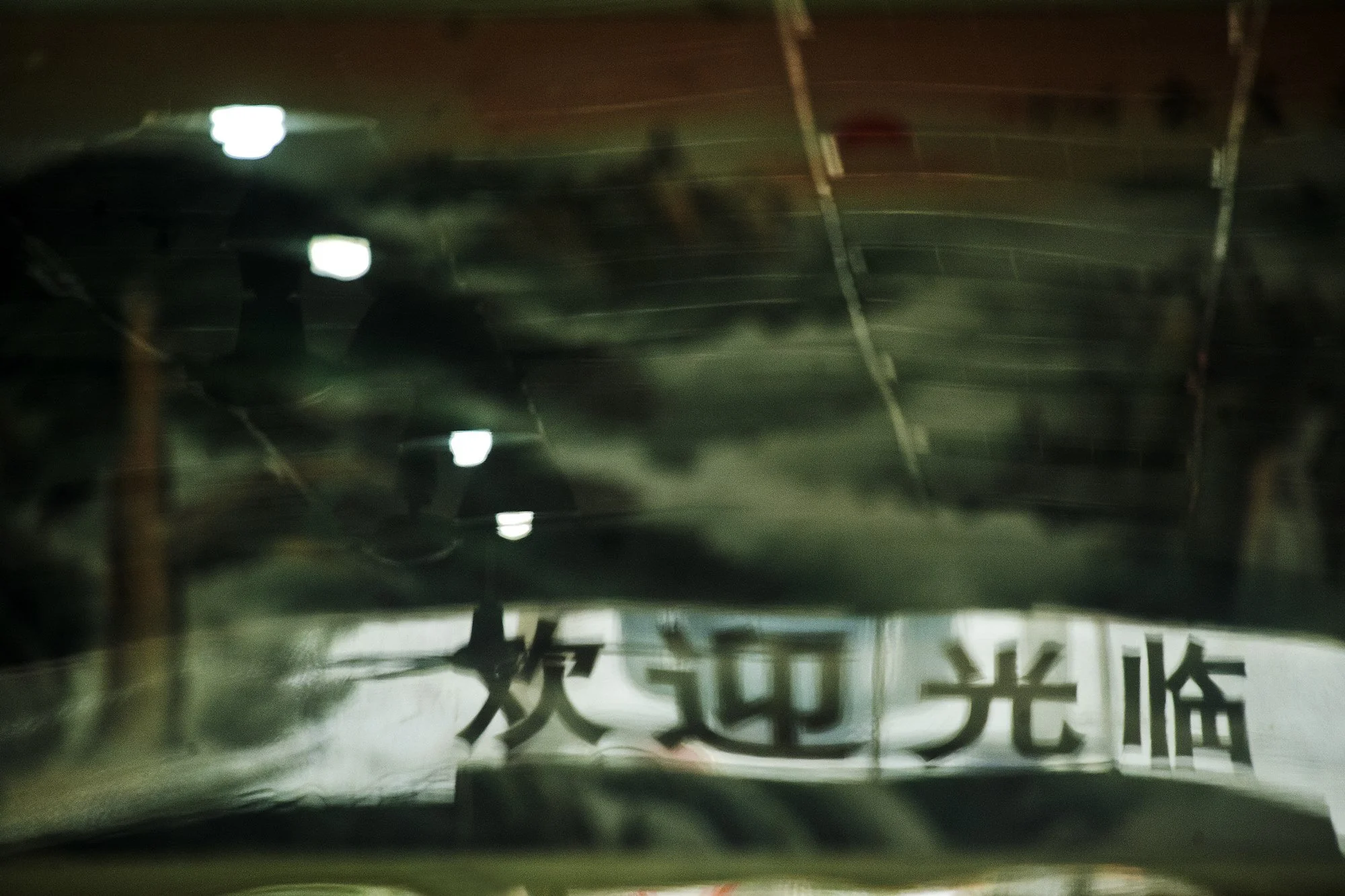
Ghosts in the Machine II (2012) John Rux-Burton | Pigment print on gloss baryta paper | 60 × 40 cm | Edition of 10 + 2 AP
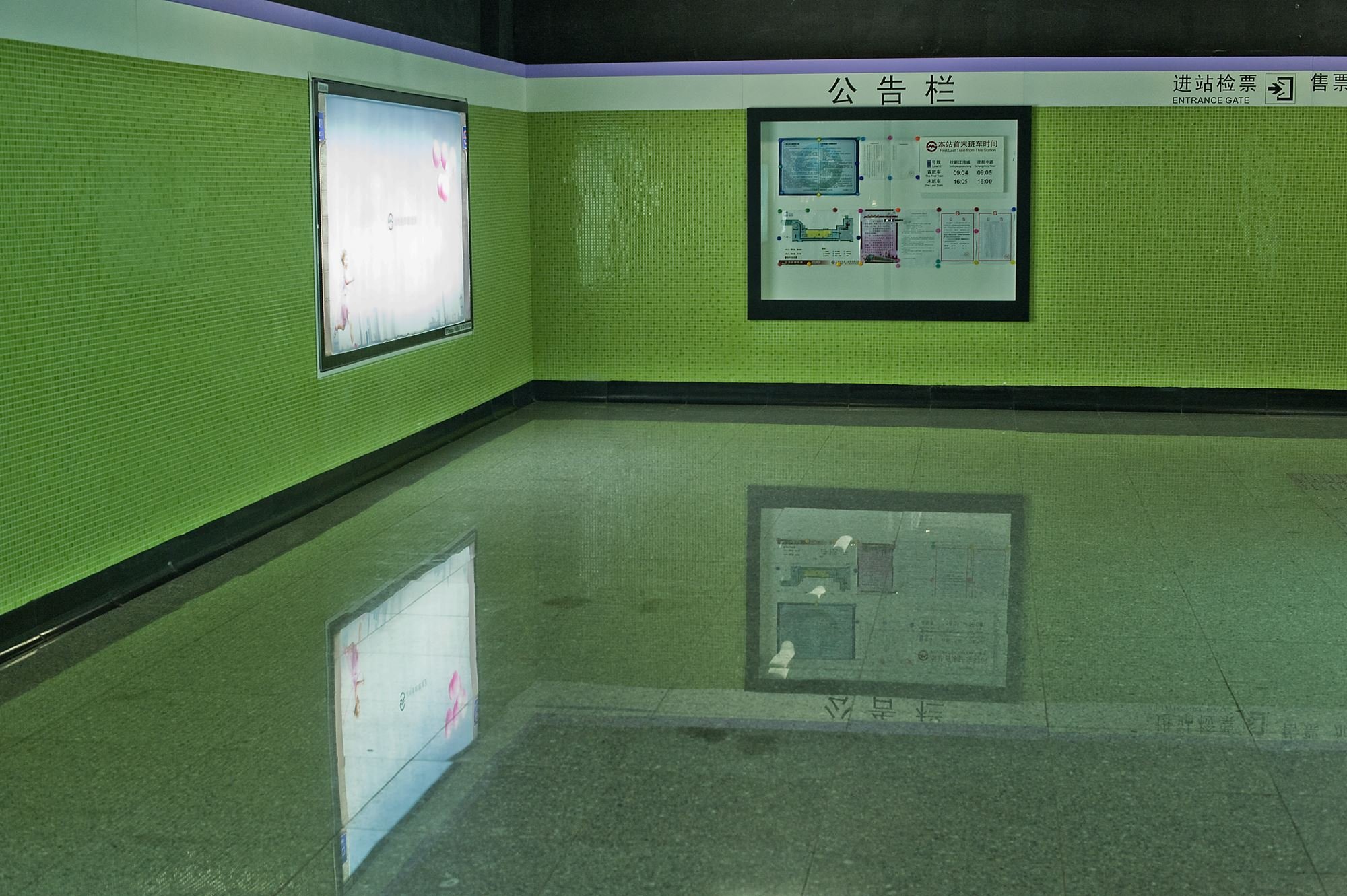
Ghosts in the Machine III (2012) John Rux-Burton | Pigment print on gloss baryta paper | 60 × 40 cm | Edition of 10 + 2 AP

Ghosts in the Machine IV (2012) John Rux-Burton | Pigment print on gloss baryta paper | 60 × 40 cm | Edition of 10 + 2 AP
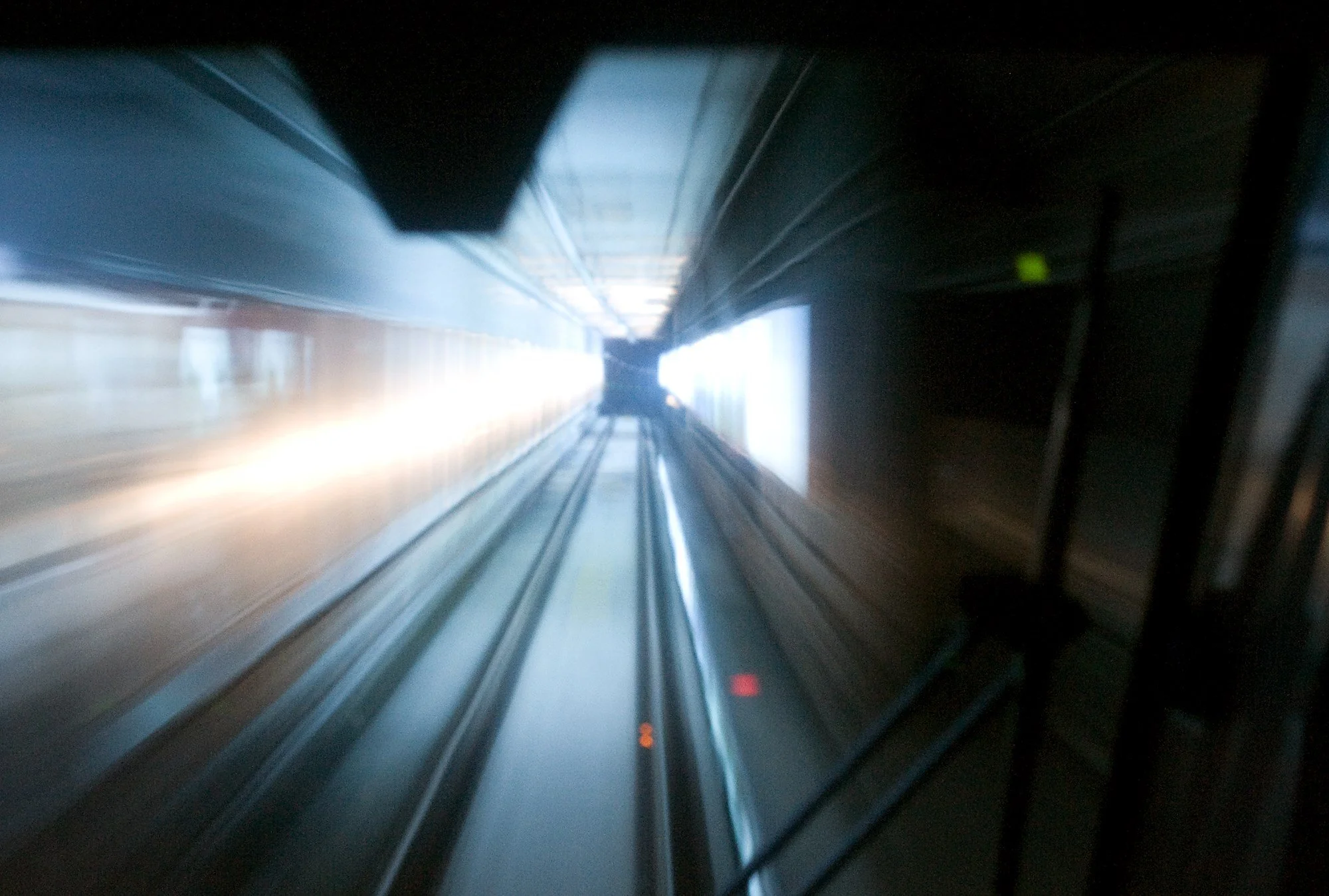
Ghosts in the Machine V (2012) John Rux-Burton | Pigment print on gloss baryta paper | 60 × 40 cm | Edition of 10 + 2 AP
-> For news, images and reflections
follow @simulistephimera
Awards & Recognitions
-
Section Winner 2009
Digital Camera Magazine (Future Publishing)
The world’s largest photography competition at the time, with over 20,000 entries across eight categories. The award carried a £1,500 prize and exhibition feature.
-
Winner, June 2009
The Guardian
Winner of The Guardian’s “Been There” Travel Photo of the Month competition, selected by picture editor Dan Chung. The image was later featured in Been There’s Best of 2009 gallery.
-
Digital Camera Magazine Online Edition 2009
Cover images of From the Marches to the Sea selected as Photo of the Day on RADAR, the online photography platform of Digital Camera Magazine.
-> For exhibition, or press enquiries, email