なァに、見ぇないものばがりのために、振りまわさィるサガでしょう、にんげんァ。いつだって、そうでしょう。見ぇない川バれてて、鳥の眼で見下ろしゃァ、透きとおった迷路が巡る、いちめんに。

For the sake of invisible things, isn’t it human nature to be spun about? It’s always been that way.
Invisible rivers flow out, and from a bird’s eye, a transparent maze spreads in all directions.

— Takako Arai, Kawa Kyoku (“A River’s Twists and Turns”), trans. Jeffrey Angles, Poetry International (© Takako Arai / Jeffrey Angles
Photo: David Emrich
Western vs Eastern Garden Aesthetics
There are a number of symbolic garden forms in the UK: Monastic gardens, with their emphasis on the Four Humours; Tudor Knot gardens; and Neo-Classical forms. Today there is a strong trend for Celtic inspiration.
However, in the West, most gardens attempt a curated piece of nature — a place where plants and landscaping create beauty, measured against natural form. William Kent, of Rousham fame, to whom we owe much for the English landscape garden, “leapt the fence and saw that all nature was a garden.” Capability Brown went further, giving us nature better than itself.
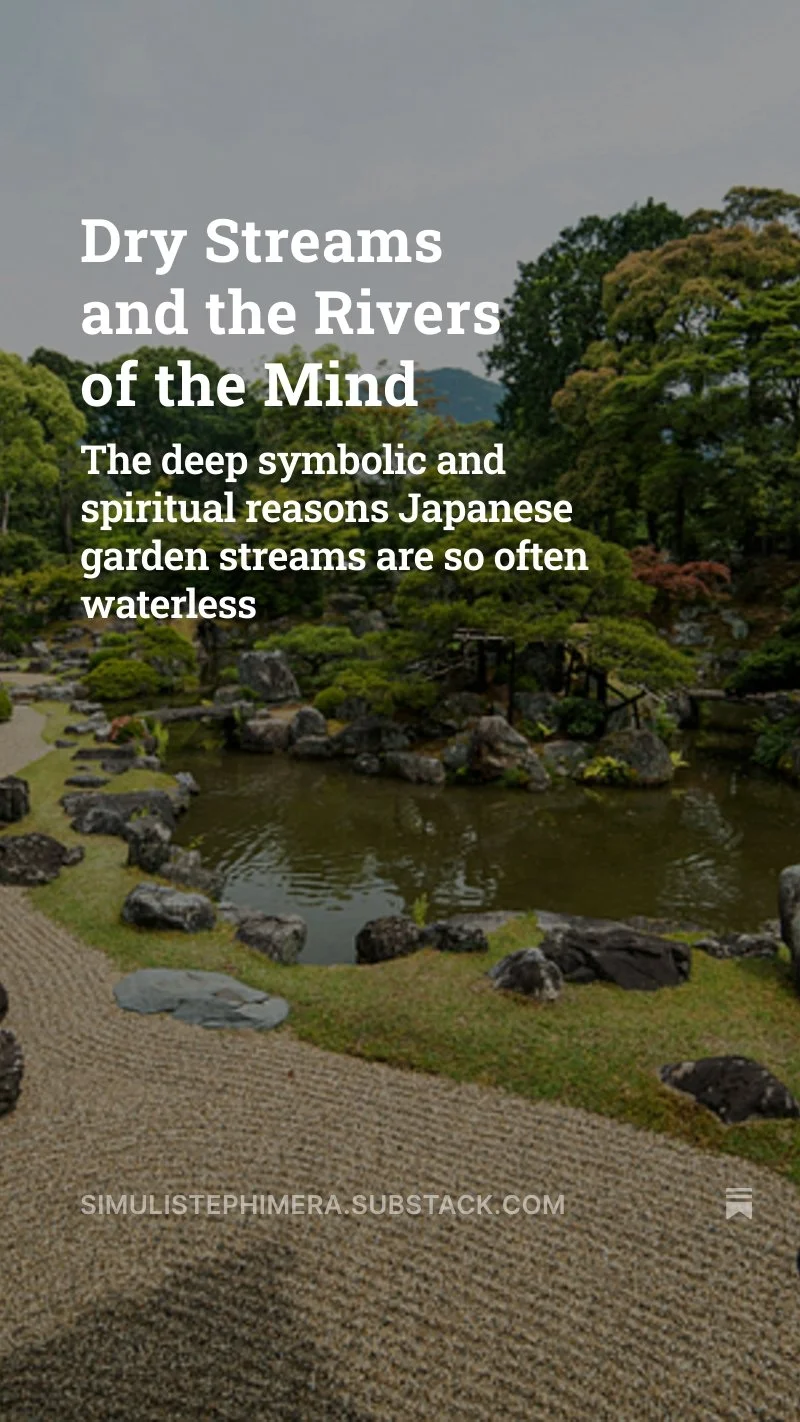
Japanese gardening, especially karesansui (枯山水, dry landscapes), is a different art entirely. Its aim is not to offer a cloistered retreat from the world, but to reveal the whole of nature — even the universe — through symbolic form … (more)
Read More on Substack
Subscribe and you will be the first to see new articles on gardens