
An introduction to the aesthetic and ethical philosophy of John Rux-Burton.

Just a rock wall, but our minds are not content to leave it at that (a mono image in preparation for one of my Simulist works)
Simulism begins from a simple question: how do humans create meaning in an indifferent universe? It is an aesthetic and philosophical framework developed by John Rux-Burton.
Simulism argues that meaning is not found in any universal truth or external order, but made in the human act of seeking it. It recognises that our minds are pattern-making engines, compelled to impose coherence upon chaos. This impulse—absurd, beautiful, and often contradictory—is the very substance of meaning itself.
Where modernism sought truth in structure and postmodernism dismantled it, Simulism refuses to oscillate between belief and irony. Instead, it proposes simultaneity: a way of holding opposing forces—comedy and tragedy, faith and futility, beauty and decay, the sacred and the banal—in deliberate coexistence. Meaning arises not from resolving these tensions, but from living within them.
Artistically, Simulism values the gesture of making as much as the made thing. It embraces both the sincerity of creation and the absurdity of its futility. The act of making—writing, photographing, shaping a garden—is an ethical response to indifference: an assertion that we will keep making sense, even knowing sense cannot be final.
Across forms, Simulism manifests differently but speaks the same language:
In fiction, it asks moral questions through satire and myth.
In poetry, it turns the trivial into personal gold, finding revelation in the fleeting that question what is really important in out lives.
In image-making, it melts photography beyond mimesis, creating new realities from the digital flux that viewer can, through pareidolia, expand to new realities and ideas.
In the garden, it becomes physical philosophy: rebirth through reuse, transience given shape.
Simulism is not about paradox or relativism. It is about simultaneity—the coexistence of incompatible truths, the dignity of our search for meaning, and the beauty of making art while knowing the universe neither notices nor cares.
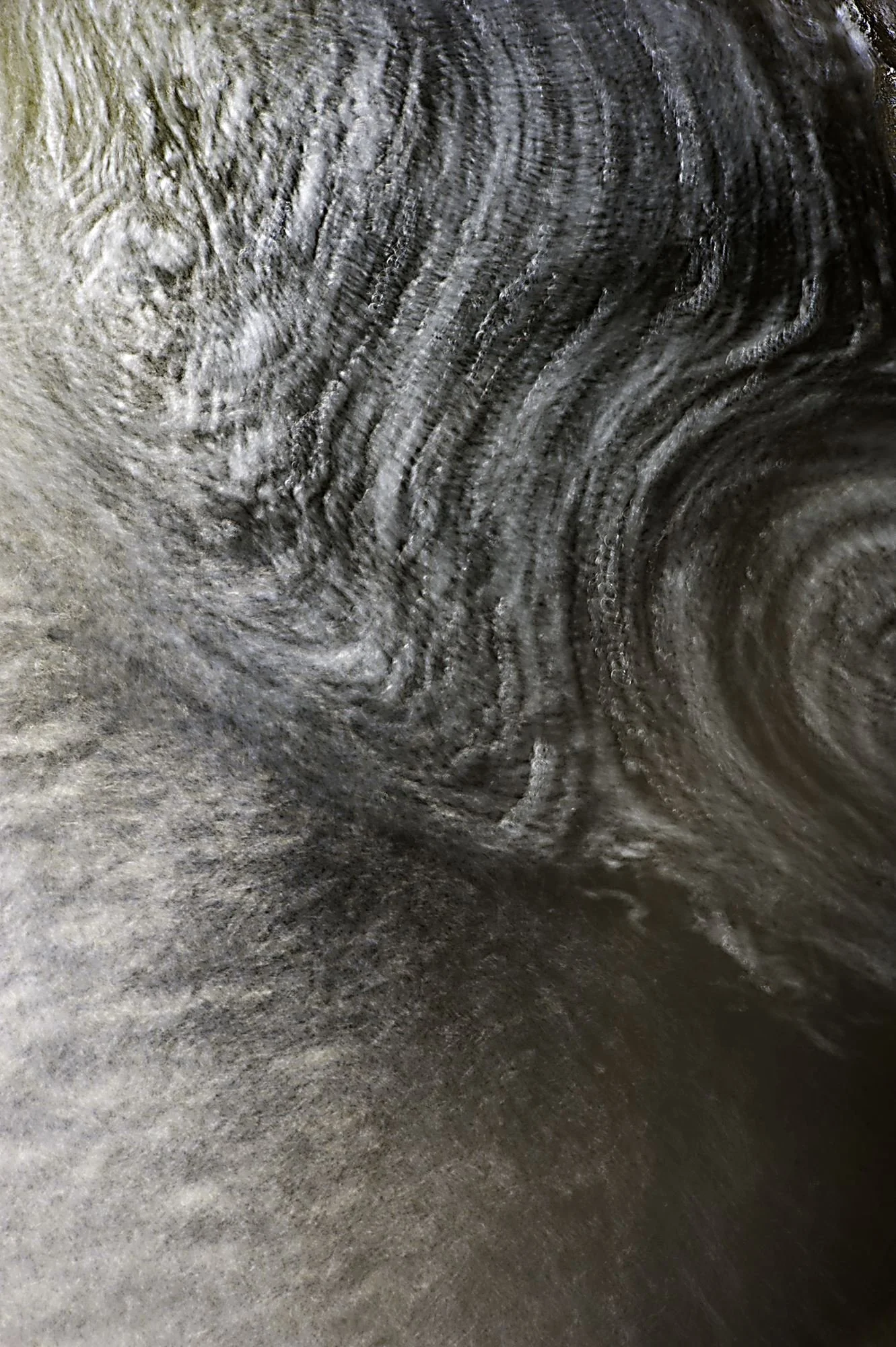
With so many repeating patterns in the world, it is unsurprising pareidolia and apophenia are so familiar in our daily lives (another image that may later form part of one of my fine art images)