On serendipity, tobi-ishi, giving and a hundred small acts taught me so much about generosity and creation
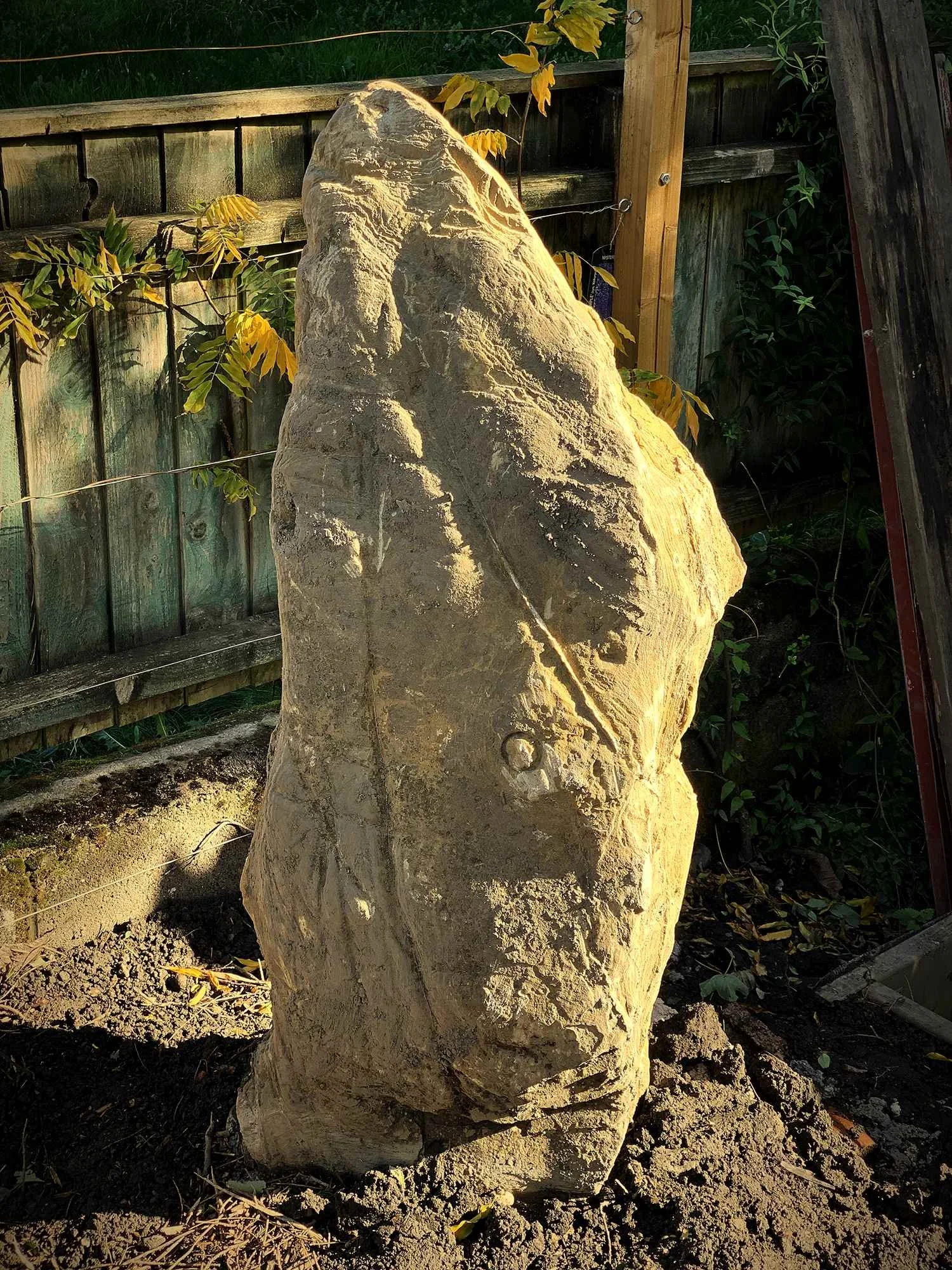
The Whale
Two years ago I had a derelict garden — good soil, but now a patch of grass and bramble. I wanted a studio and a pleasant space around it. I meant to turn it into something practical: a vegetable plot with a shed where I could write and make photographs.
Then, by chance, I found a Japanese pagoda that a pop star was throwing into a skip. I rescued it, set it down among the weeds, and everything changed.
This is a story of tobi-ishi(飛石)— the Japanese word for stepping stones — of how one thing led to another and only afterwards revealed itself as a path.
The Pagoda is a work of art. It is not screwed or nailed, the joinery is so good, it slots together
What began as a practical space turned into an experiment in mitate-mono(見立て物)— transformation through reuse — and then into a symbolic landscape shaped by the ideas at the heart of my Simulist practice. The aim stopped being order or ornament; it became meaning itself: to ask questions and let the answers create their own form.
This post is public, its free, please share it with anyone you think will enjoy it too
So I began asking others to join me. I posted on Freegle, on Facebook, and spoke to neighbours and strangers. More than a hundred people helped — donating or selling things for token sums, giving plants saved from drive extensions, tools, time, and knowledge. They gave rocks — more than thirty tonnes of them — and objects of quiet beauty: pieces of japonaiserie, fragments of stories, lives, and gardens past.
The last part of this — the memories — I must not speak of. So many items were precious to the people who gave them. In my poetry I often reflect on the trivial things we elevate into totemic signposts of our lives. These were not trivial. Plants grown from seed. Items loved by lost parents, siblings, friends. Trees too important to leave behind; they needed a home where they would be loved.
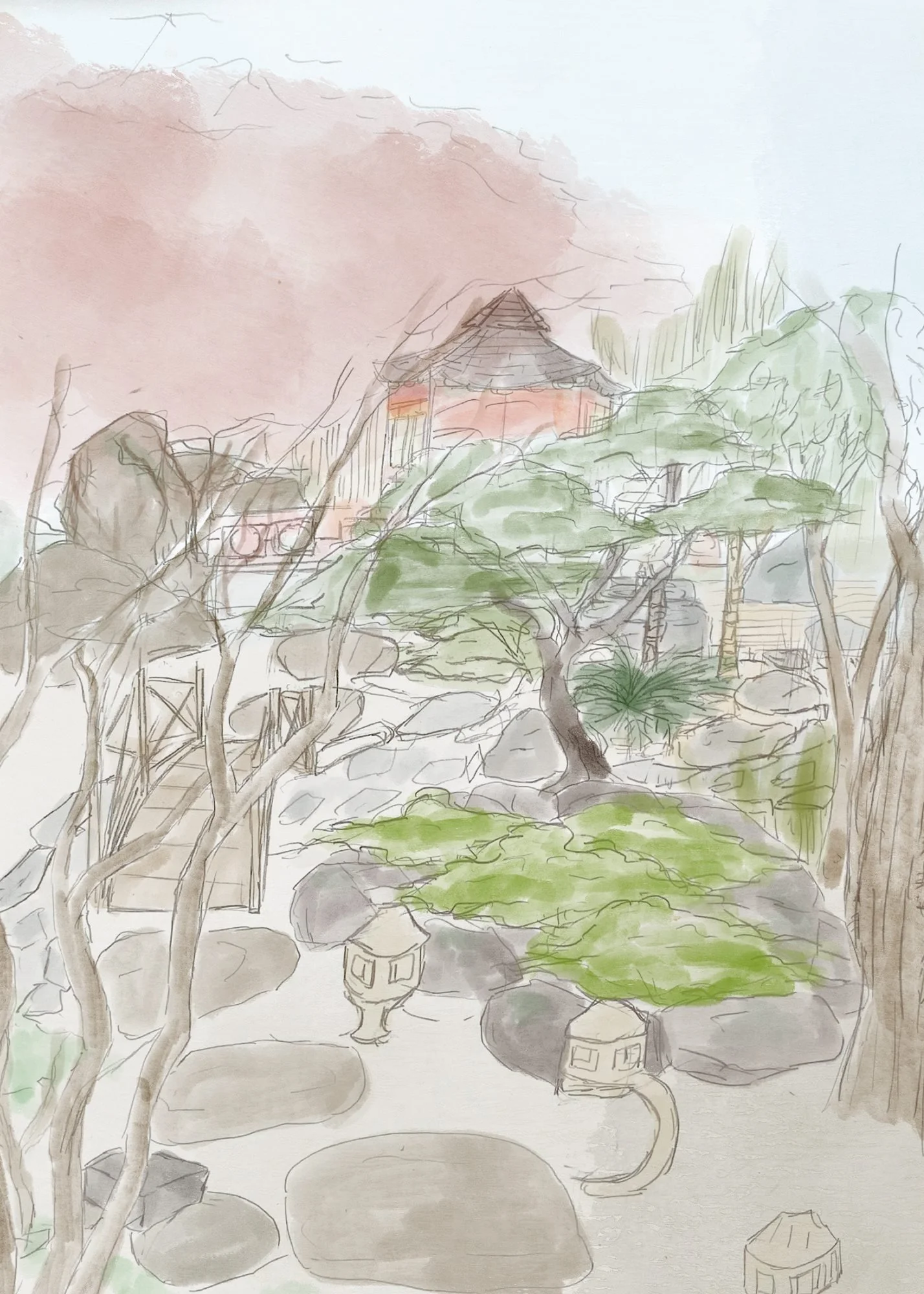
Artist Impression Elliot Rux-Burton
Out of this improbable generosity, a space is emerging: The Welsh Marches Japanese Garden — Where the Whale Talks to the Stars. It’s no longer just a private project; it’s an artwork made by an artist, an outstanding gardener and friend, a loving family, and the collaboration of a whole community.
You can read more about the garden, the ideas behind it, and see more photos at www.johnruxburton.co.uk.
Allow me to reflect on what this has meant to me.
I’ve spent my life helping others raise money. I thought I understood generosity.
Then, one day, people started giving to me.
It felt — I imagine, anyway — like the moment a teacher watches their own child walk through the school gates for the first time: seeing a familiar world, but from the other side.
I wasn’t helping someone else realise a vision any more; I had a vision — something that mattered intensely to me — and so the stakes were no longer professional, they were personal. Don’t take that to imply my fundraising career wasn’t heartfelt. Perhaps someone can fake it and raise a quarter of a billion pounds and bring half a million people to give — I couldn’t. I believed, and I still passionately believe in education.
But now I was the one asking for help, hoping people would believe with me. I was an actor living the lines with conviction. This was me.
It wasn’t a completely new experience. As a writer and artist, I knew that exposure well enough. It’s terrifying — though less so now, because so many people voted with their feet and showed they believed in what I believed in too. Such wins are Nietzschean.
The hard work of building the dry is nearly done; just in time for planting. If you want to know about the significance of dry streams, see my article on Substack: Dry streams and the rivers of the mind
The outcome is that the garden is scheduled to open in the spring. It won’t be finished — gardens never are — but it will be started: a space people can enjoy, where I can write and create images, and where charity open days and collaborations can occur. It was a community believing in an idea that made that possible.
It’s made me rethink philanthropy entirely. We talk about donors enabling visionaries, about scale, reach, and impact. But underneath all that is something quieter: the human need to take part in someone else’s act of making. Because when one person makes a shadow in the flames on the cave wall, all witness — and they can join that dance, the expression of what we want from each other, from humankind.
Their support hasn’t just helped me build a garden; it’s reconnected me with the wonder that drew me to philanthropy in the first place.
It’s made me want to do more — to make the space not just beautiful, but generous in spirit: a place where ideas, art, and people can meet.
So thank you — for every gift, every message, every moment of belief
Acer Grove - Artist Impression: Elliot Rux-Burton
.
You’ve reminded me that giving and creating are the same impulse. One day, when the garden opens and the whale finally talks to the stars, I hope all who helped so much will see their hand in its voice.
Please visit johnruxburton.co.uk/garden — read their names and do them honour.
Next: In the next piece, I’ll write about planting — the moment when an artwork begins to live, and when, perhaps, a garden starts to speak back. Its starting next week!